
Nov. 6, 2025, 3:07 p.m.
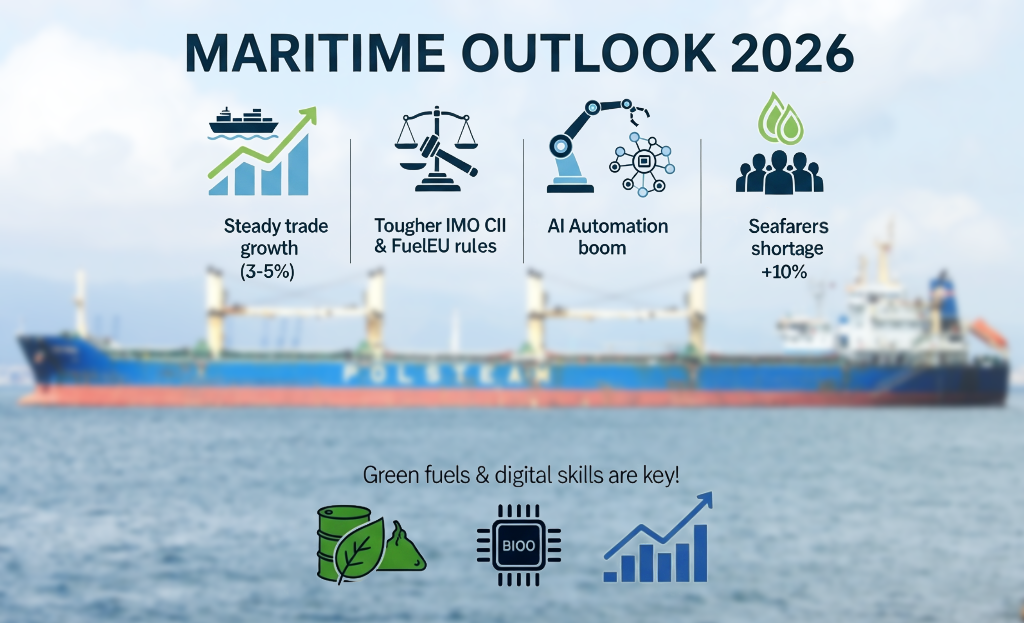
The maritime transport industry stands at a pivotal moment as we approach 2026. With global trade recovering from recent disruptions and new challenges emerging, seafarers must stay informed about evolving trends. This outlook explores what to expect in the coming year, focusing on economic factors, regulatory changes, technological advancements, and operational shifts. Understanding these elements will help maritime professionals navigate safer and more efficient careers at sea.
Global Trade Recovery and Freight Rates
Global shipping volumes are projected to grow modestly in 2026, driven by steady demand in consumer goods and energy sectors. According to forecasts from major analysts, container trade could rise by 3 to 5 percent, supported by easing inflation and stronger economic growth in Asia and Europe. Bulk cargo, including iron ore and grains, will benefit from infrastructure investments in developing regions.
Freight rates, which stabilized in 2025 after volatile years, are expected to remain balanced. The Baltic Dry Index may hover around current levels unless major geopolitical events disrupt supply chains. For seafarers, this means more consistent voyage patterns but potential competition for berths in high-demand routes like Asia-Europe and trans-Pacific lanes. Crews should prepare for optimized scheduling, with shorter port stays to maximize vessel utilization.
Stricter Environmental Regulations
Environmental compliance will dominate 2026 operations. The International Maritime Organization's (IMO) Carbon Intensity Indicator (CII) ratings will enforce tougher standards, pushing shipowners to reduce emissions by at least 2 percent annually. FuelEU Maritime regulations in Europe will penalize high-carbon fuels, accelerating the shift to alternatives like LNG, methanol, and ammonia.
Many vessels will adopt energy-saving technologies, such as wind-assisted propulsion and air lubrication systems. For officers and engineers, this translates to mandatory training in new fuel handling and emissions monitoring. Expect increased audits and potential detentions for non-compliant ships. Seafarers play a crucial role in daily operations to maintain good CII scores, directly impacting charter opportunities.
Digital Transformation and Automation
Technology adoption will surge, with autonomous systems and digital twins becoming standard on modern fleets. By 2026, over 20 percent of newbuilds may feature partial automation, reducing crew workloads for routine tasks. Tools like AI-driven weather routing and predictive maintenance will minimize downtime and fuel use.
Satellite communications and 5G integration will improve onboard connectivity, enabling real-time data sharing for better decision-making. Ratings and deck crews will need familiarity with electronic logbooks and remote monitoring apps. While automation enhances safety, it also demands upskilling in cybersecurity to counter rising digital threats.
Crew Welfare and Shortage Challenges
The seafarer shortage persists, with demand for qualified personnel expected to outstrip supply by 10 percent in 2026. Initiatives like enhanced mental health support and better internet access aim to improve retention. Wages may rise for specialized roles, such as those in green fuels or cyber operations.
Diversity onboard will increase, with more women and young professionals entering the field. Training programs focusing on soft skills alongside technical expertise will be essential. For current seafarers, this means opportunities for promotion but also the need to mentor newcomers.
Geopolitical and Risk Factors
Ongoing tensions in key chokepoints like the Red Sea and Panama Canal could reroute traffic, lengthening voyages and raising insurance costs. Piracy in West Africa and the Gulf of Guinea remains a concern, requiring vigilant security drills.
Climate events, including extreme weather from El Niño patterns, may disrupt schedules more frequently. Robust risk management, including ballistic protection on vulnerable routes, will be standard.
In summary, 2026 promises a dynamic year for maritime transport, blending opportunities in green tech with challenges in compliance and crewing. Seafarers who embrace continuous learning will thrive in this evolving landscape. Stay proactive with certifications and industry updates to secure your place in the future of shipping.
Source: Based on IMO reports, UNCTAD World Trade updates, and Clarksons Shipping Intelligence Network forecasts (2025 data).
There are no comments.
Similar Posts
-
Boosting Bulk Carrier Connectivity: Aquarius Upgrades Fleet with Navarino Solutions
Nov. 24, 2025, 5:55 p.m.
-
Advantages of Seafarer Knowledge Assessment on the S.A.I.L. Platform
Oct. 26, 2025, 2:42 p.m.