Dec. 7, 2025, 8:41 a.m.
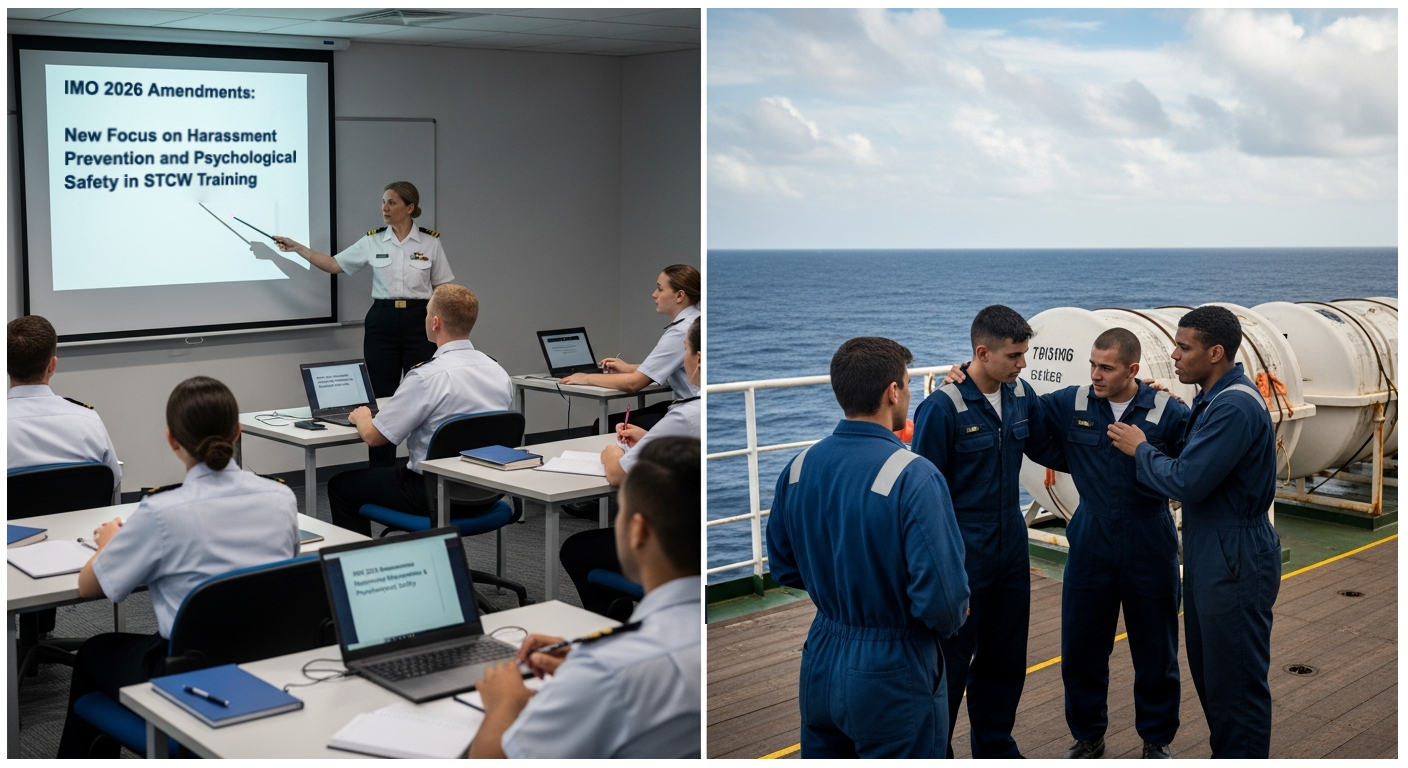
Starting January 1, 2026, the IMO amendments adopted under MSC.108(66) and consolidated in Resolution MSC.560(108) will bring significant updates to the STCW Convention, with special attention to the human element on board. The maritime industry has long recognized that 70-80% of accidents are linked to human factors such as fatigue, stress, poor communication, and interpersonal conflicts. These new requirements directly address workplace harassment, bullying, and the creation of a respectful shipboard culture.
The most visible change affects the Basic Training module "Personal Safety and Social Responsibilities" (PSSR) under Table A-VI/1-4 of the STCW Code.
Key New Competences in PSSR (effective 1 January 2026)
- Recognizing signs of harassment, sexual harassment, and bullying on board Crew members must now be able to identify different forms of inappropriate behavior early, before situations escalate.
- Understanding the impact of harassment and bullying on safety Training emphasizes how a toxic work environment affects mental health, teamwork, decision-making, and ultimately the safety of the vessel and crew.
- Safe intervention techniques (bystander intervention) Seafarers will learn practical and safe ways to step in when they witness unacceptable behavior, without putting themselves at risk.
- Reporting incidents without fear of reprisal Clear procedures must be taught on how to report harassment or bullying through official channels, with emphasis on protection against retaliation.
- Contributing to a respectful and inclusive workplace culture The training now includes understanding cultural differences, promoting mutual respect, and building positive team dynamics in multinational crews.
These topics are no longer optional recommendations; they are mandatory minimum requirements for every seafarer completing Basic Training or refresher courses after 1 January 2026.
Why the IMO Made These Changes
The maritime sector has seen growing reports of harassment and bullying, particularly affecting women seafarers and junior ranks. Combined with high stress and isolation at sea, such behavior seriously undermines safety. The amendments align STCW with the Maritime Labour Convention (MLC) requirements on harassment-free workplaces and reflect broader industry commitments to diversity, inclusion, and mental health.
What It Means for Training Centers and Seafarers
- All MET institutions must update their approved PSSR courses by the deadline.
- Existing certificates remain valid until their expiry date, but refresher training taken after 1 January 2026 must include the new competences.
- Companies should begin awareness programs and update their onboard policies now to ease the transition.
Creating a shipboard environment where every crew member feels safe and respected is no longer just good practice; it is a regulatory requirement that directly contributes to safer ships.
There are no comments.
Similar Posts
-
Major Flag States Advance Collaboration Through the International Flag State Association
Dec. 20, 2025, 10:42 a.m.
-
InterManager Calls for Fatigue Rules to Match Real-Life Demands on Ships
Nov. 1, 2025, 7:53 a.m.
-
Marine Insurers' Role in Combating Sexual Misconduct at Sea
Sept. 15, 2025, 7:13 a.m.