
Dec. 23, 2025, 9:28 a.m.
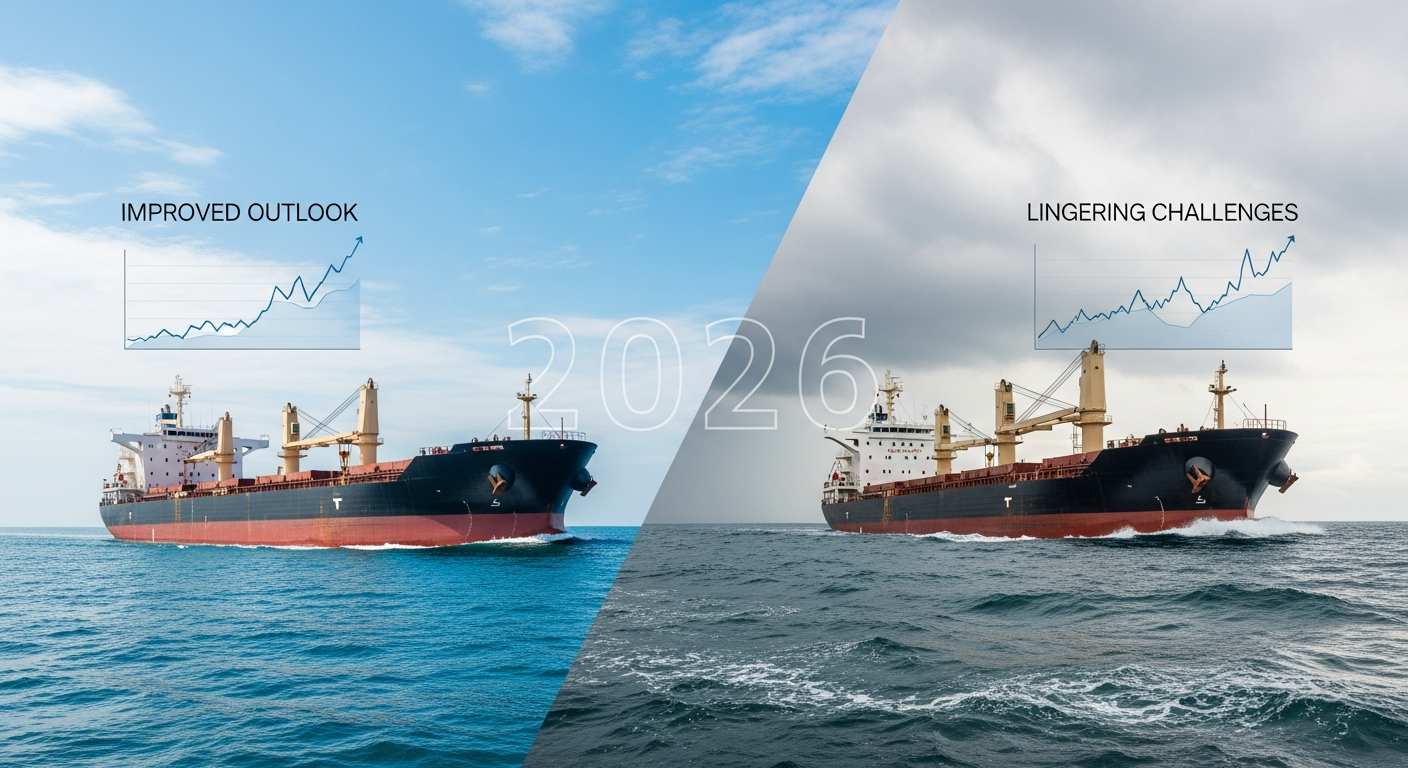
The dry bulk shipping market is set for a more stable year in 2026 after facing significant disruptions in 2025 from geopolitical issues and trade uncertainties. According to maritime analysts at Drewry, these factors impacted market sentiment more than the core balance of demand and supply. The second half of 2025 saw some stabilization, thanks to eased trade policies between the US and China, including a tariff truce in early November. This has lowered risks of sudden trade shocks and helped steady commodity flows heading into 2026.
With a calmer global economic environment, the fundamentals of supply and demand are expected to take center stage again. This positions the market positively for moderate growth in freight rates, though certain risks could limit the upside.
Key Growth Drivers
Several sectors are likely to boost demand for dry bulk vessels in 2026.
First, bauxite trade is projected to support Capesize ships strongly. Global bauxite exports could increase by 8.6 percent, fueled by robust demand in China and Europe for aluminum production. Guinea has ramped up shipments in recent months to meet Chinese needs, with further production expansions planned. Australia aims for 57 to 59 million tonnes of output in 2025, driven by demand for green infrastructure and electric vehicles. India's growing aluminum industry will also contribute through higher imports. However, potential oversupply from Indonesia and Australia might cap some of this growth.
Second, soybean exports from South America are forecasted to surge. Brazil's 2025-26 crop is expected to hit a record 178 million tonnes, with planting progressing quickly. This could lead to strong exports early in 2026. Argentina's soybean exports may reach 12.6 million tonnes, nearly triple the previous year's volume, as export taxes have been suspended and China absorbs most of the supply.
Third, India's steel sector will drive coking coal imports to new highs. Ongoing expansions by major producers like Tata Steel, JSPL, and SAIL rely heavily on imported metallurgical coal from Australia, the US, Russia, and South Africa, since domestic supplies do not meet quality standards.
Potential Headwinds
Despite these positives, challenges remain that could pressure the market.
A major concern is the large number of new vessels entering service. Over 600 dry bulk ships are scheduled for delivery in 2026, the highest in more than a decade. Many of these are in mid-size segments, which will increase overall fleet capacity at a time when demand growth is steady but not explosive.
Iron ore trade offers limited support. While India's imports have risen in 2025 due to steel production needs, the volumes are small on a global scale and have minimal impact on tonne-miles. The Simandou project in Guinea is in early stages and will not significantly affect Capesize availability next year.
Additionally, improved security in the Red Sea following a recent ceasefire could allow vessels to resume shorter routes through the Suez Canal. This would reduce voyage lengths for Panamax and Supramax ships that previously detoured around the Cape of Good Hope, effectively adding capacity to the market and potentially lowering rates.
Outlook for Seafarers and the Industry
For seafarers working on dry bulk carriers, 2026 promises a more predictable environment compared to the volatility of recent years. Stable trade flows in commodities like grains, coal, and minor bulks should support consistent vessel employment. However, an expanding fleet may lead to softer charter rates, which could influence crewing demands and contract terms.
Seafarers should stay updated on global trade trends, as shifts in routes or commodity demands can affect voyage patterns and onboard requirements. Proper training in safety, environmental regulations, and cargo handling remains essential for career advancement in this evolving market.
Source: Based on Drewry's dry bulk market forecast, published via Hellenic Shipping News.
There are no comments.
Similar Posts
-
Advantages of Seafarer Knowledge Assessment on the S.A.I.L. Platform
Oct. 26, 2025, 2:42 p.m.
-
Top 5 Crewing Companies in the World
Oct. 16, 2025, 9:44 a.m.
-
Human Capital in the Green Transition: Preparing the Future Maritime Workforce
May 25, 2026, 6:31 p.m.
-
CMA CGM Significantly Increases Women Seafarers Through She Sails Program in First Year
Dec. 18, 2025, 10:57 a.m.