May 25, 2026, 6:31 p.m.
The Evolution of Global Shipping Standards The international shipping industry is currently undergoing one of its most significant structural transformations since the transition from sail to steam. As global regulatory bodies accelerate the enforcement of strict decarbonization targets, the technical framework governing merchant vessels is shifting toward alternative fuel systems and advanced energy-saving technologies. While much of the public and commercial focus remains centered on vessel design, fuel availability, and engineering innovations, the human element represents the most critical factor in ensuring the success of this transition. For maritime students and seasoned officers alike, understanding the changing landscape of professional requirements is vital for long-term career planning.
To address the immense educational gaps brought about by these technological changes, leading international organizations have established dedicated collaborative frameworks. Chief among these initiatives is a specialized joint task force designed to oversee a fair and equitable transition for the global seafaring workforce. This collaborative body unites the International Maritime Organization, the International Labour Organization, various shipping federations, and global transport unions. The primary objective of this coalition is to ensure that as the maritime sector adopts green technologies, the seafaring workforce is not left behind, but is instead properly trained, protected, and legally certified to handle new operational realities.
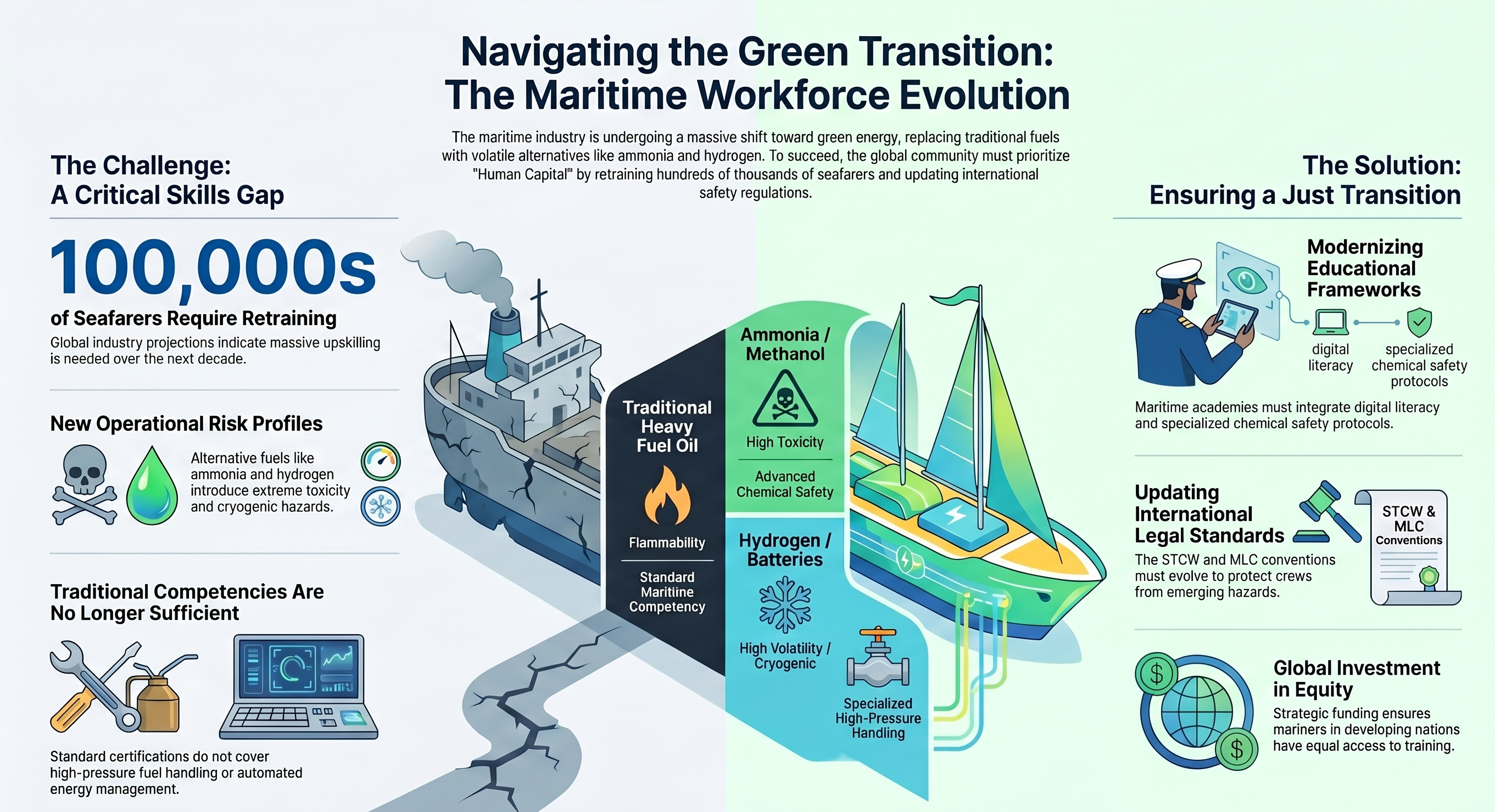
The Urgent Need for Comprehensive Retraining The introduction of zero or near-zero emission fuels presents unprecedented operational challenges on board modern merchant ships. Future propulsion and auxiliary systems will likely rely on substances such as ammonia, hydrogen, methanol, and advanced battery technology. Each of these power sources introduces specific risk profiles that differ drastically from traditional heavy fuel oil or marine gas oil. For example, some alternative fuels possess high toxicity levels, while others are highly volatile or require storage under extreme cryogenic conditions. Consequently, the standard competencies historically required of marine engineers and deck officers are no longer sufficient to guarantee safety at sea.
Industry projections indicate that hundreds of thousands of seafarers will require comprehensive retraining or specialized upskilling over the next decade. This massive educational undertaking requires a complete overhaul of current maritime academy curricula and corporate training regimes. Competency frameworks must expand to include advanced chemical safety, specialized high-pressure fuel handling, emergency response protocols for non-conventional fuel leaks, and digital literacy for automated energy management systems. For mariners currently entering the industry, proactive engagement with these new technologies will serve as a major competitive advantage in the global employment market.
Policy Frameworks and the Protection of Seafarer Rights A sustainable transition involves more than just technical training; it must also prioritize the institutional welfare and safety of the individuals operating the ships. The joint task force emphasizes that the move toward green shipping must align with the core principles of decent work, fair compensation, and robust occupational health standards. As new equipment is integrated into shipboard environments, international standards such as the Standards of Training, Certification and Watchkeeping (STCW) Convention and the Maritime Labour Convention (MLC) must be updated to legally protect crews from emerging operational hazards.
Furthermore, the task force actively advocates for global funding mechanisms and strategic investment in training infrastructure, particularly in developing nations that traditionally supply a large percentage of the global seafaring pool. By establishing equitable access to modern training facilities, the international community can prevent a workforce deficit and ensure that mariners from all geographic regions can participate equally in the green economy. For educational institutions, this represents an urgent call to secure partnerships with technology developers and state authorities to upgrade simulator facilities and instructional materials.
Strategic Recommendations for Modern Mariners As the maritime industry progresses toward its net-zero goals, individual seafarers must adopt a mindset of continuous professional development. Relying solely on foundational certifications will become increasingly insufficient as ship owners rapidly decommission older vessels in favor of eco-friendly designs. Officers and ratings should actively seek out supplementary certifications in hazardous cargo handling, advanced thermodynamics, and electronic control systems where available.
Ultimately, the green transition should not be viewed by maritime professionals as an operational hurdle, but rather as an opportunity to elevate the status of the seafaring profession. Operating the highly complex, environmentally conscious fleet of tomorrow will require a generation of highly skilled, tech-savvy mariners who treat safety, digital proficiency, and environmental stewardship as inseparable components of professional excellence.
Source Reference: This article is adapted and summarized from official reports regarding the Maritime Just Transition Task Force, an international initiative dedicated to preparing seafarers for the green shipping era.
There are no comments.
Similar Posts
-
Cruise Sector Revival: Attracting Younger Guests with Eco-Friendly Innovations
Nov. 5, 2025, 8:19 a.m.
-
Modern Shipping: How Resilience, Digital Tools and Sustainability Shape Your Work at Sea
Feb. 10, 2026, 4:45 p.m.
-
Maintaining Safe Distance in Close-Quarters Maneuvers: A Key to Maritime Safety
Jan. 24, 2026, 10:30 a.m.