
Jan. 16, 2026, 9:46 a.m.
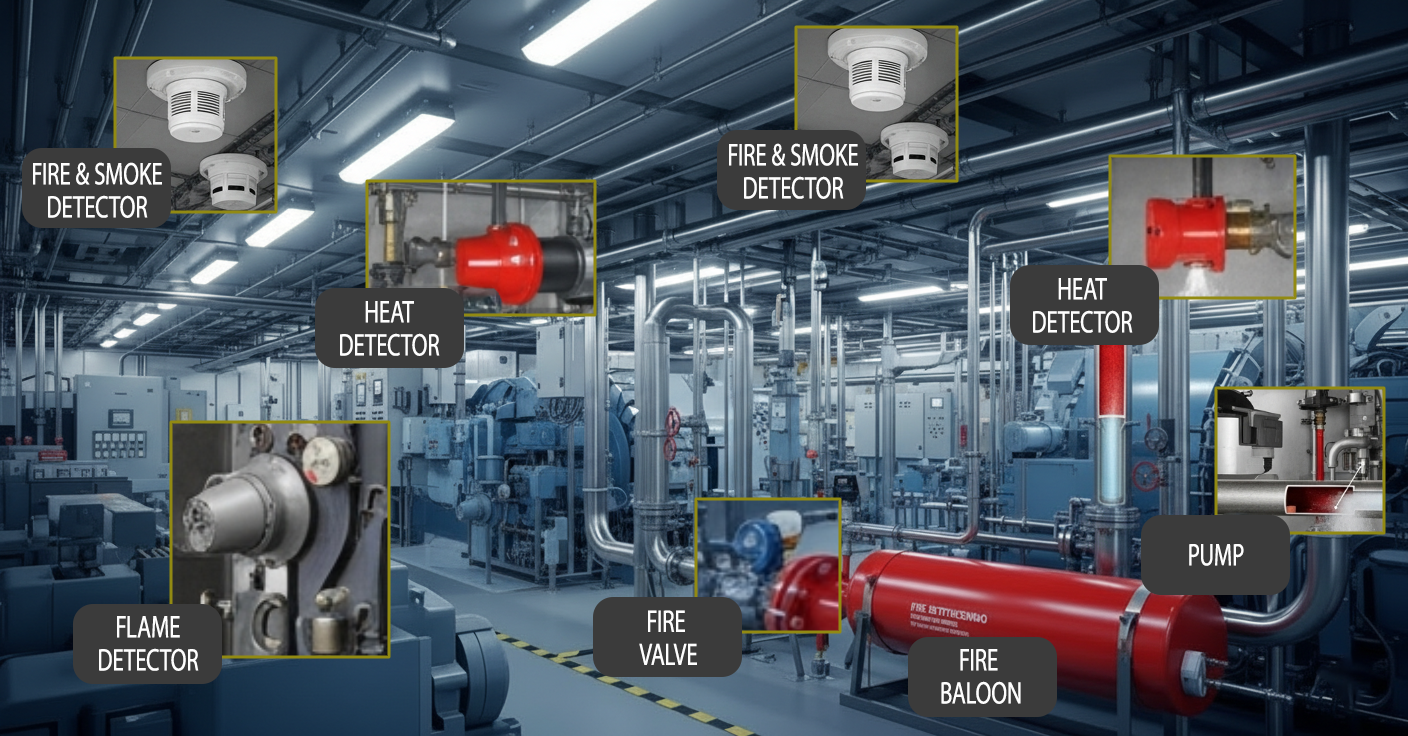
The International Association of Classification Societies (IACS) regularly issues Unified Interpretations (UIs) to ensure consistent application of SOLAS (Safety of Life at Sea) regulations across classification societies and flag states. These interpretations help remove uncertainties in fire protection requirements, making it easier for shipbuilders, owners, and crew to maintain high safety standards.
Two key updates, UI SC73 (Revision 3) and UI SC160 (Revision 2), focus on fire detection and extinguishing systems. These changes aim to optimize equipment placement based on real-world risks, avoiding unnecessary installations while prioritizing crew and vessel safety.
Portable Fire Extinguishers in Vehicle Spaces (UI SC73 Rev.3)
This revision clarifies SOLAS Regulation II-2/20.6.3.1, which covers the number and location of portable fire extinguishers in areas used for carrying vehicles, such as Ro-Ro decks.
The main change excludes open weather decks from the mandatory requirement for portable extinguishers dedicated to vehicle carriage. On enclosed vehicle spaces, portable extinguishers remain essential due to risks like smoke buildup and limited access. However, open weather decks benefit from natural ventilation and existing fire-main systems (hydrants and hoses), which provide adequate firefighting capability without additional portable units.
This practical adjustment reduces equipment redundancy and potential costs for shipowners. All IACS member societies will apply this interpretation uniformly starting 1 July 2026.
Fixed Fire Detection Systems (UI SC160 Rev.2)
This update addresses SOLAS Regulation II-2/7.5.5.3 and focuses on fixed fire detection and alarm systems, particularly for vessels using Method IIIC fire protection. Method IIIC relies on structural fire boundaries (A- and B-class divisions) in accommodation spaces without requiring full sprinkler coverage.
Under the revised interpretation:
- Fixed fire detection is required in service spaces (such as galleys, laundries, or stores) only if they are located within the accommodation block.
- Service spaces outside the accommodation block may be exempt under Method IIIC.
- Control stations and cargo control rooms always require fixed fire detection and alarms, regardless of the fire protection method, because these areas are vital for ship operations and safety.
- Detection systems must continue to cover all escape routes and accommodation spaces to provide early warnings for the crew.
These rules apply to ships constructed on or after 1 July 2026. Early integration during the design phase helps avoid expensive modifications later.
Why These Changes Matter for Seafarers
Fire safety is a core responsibility for every mariner. Understanding these updates allows officers and crew to:
- Recognize where specific equipment is required (or not) on different vessel types.
- Conduct more effective inspections and drills.
- Contribute to compliance during surveys and certifications.
By focusing protection where risks are highest, these IACS interpretations promote smarter, more efficient safety measures that protect lives without overburdening operations.
Resource: Original updates from IACS via Maritime Cyprus (15 January 2026).
There are no comments.
Similar Posts
-
SAFER PILOT TRANSFER OPERATIONS: UNDERSTANDING THE NEW SOLAS V/23 AMENDMENTS
April 25, 2026, 6:55 p.m.
-
Major Flag States Advance Collaboration Through the International Flag State Association
Dec. 20, 2025, 10:42 a.m.
-
International Regulations for Safe and Efficient Container Shipping at Sea
Feb. 16, 2026, 7:31 a.m.
-
Enhancing Cyber Resilience in Shipboard Systems and Equipment: A Guide for Seafarers
Feb. 11, 2026, 8:04 a.m.