
Jan. 27, 2026, 8:43 a.m.
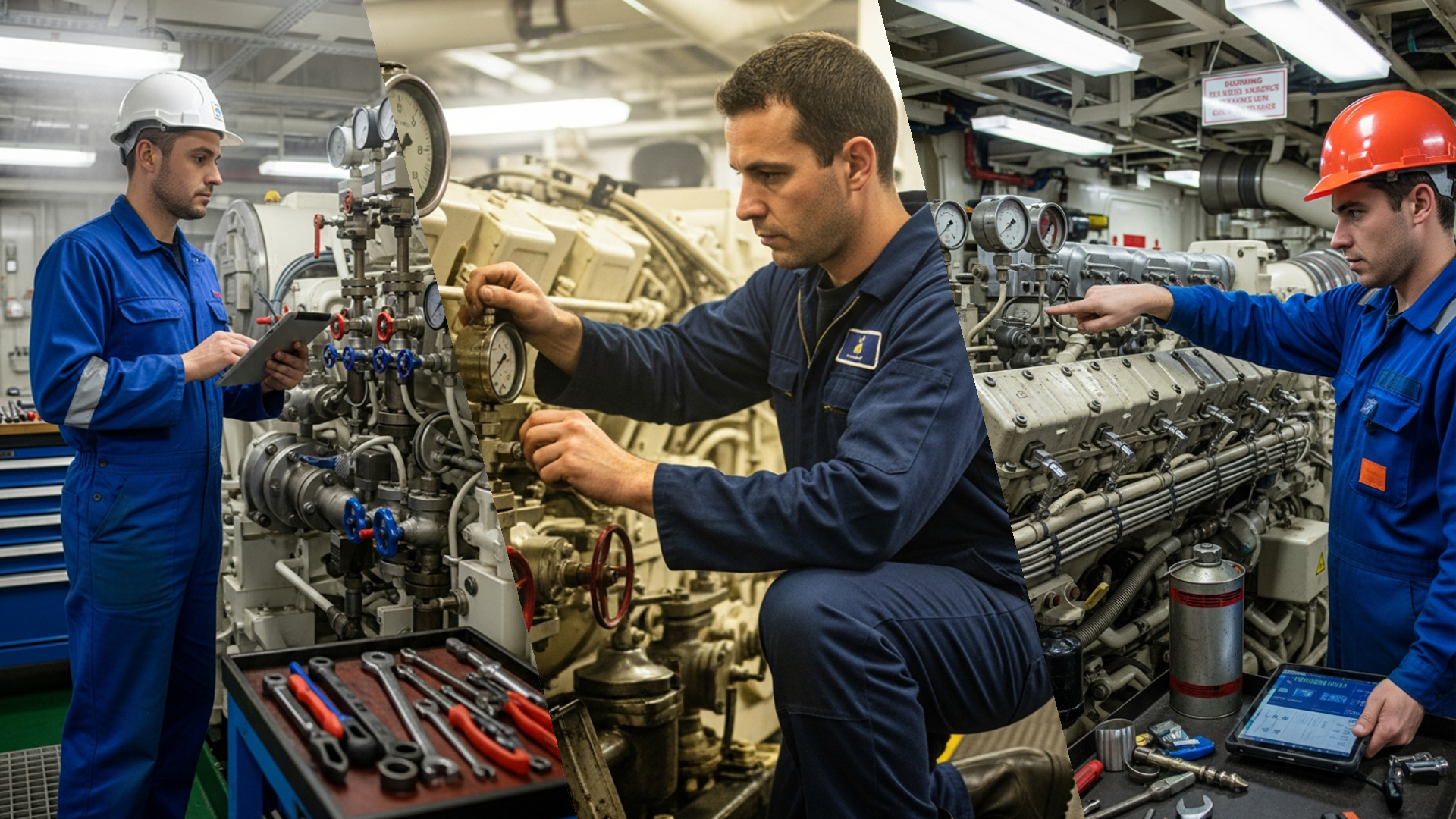
Marine engineer officers play a vital role in the merchant navy. They keep all mechanical, electrical, and propulsion systems on board running safely and efficiently. This hands-on profession requires strong technical knowledge of ship engines, auxiliary machinery, and related equipment. Professionals in this field usually complete a marine engineering degree or related program to learn about ship construction, operation, maintenance, propulsion systems, and onboard machinery.
This article explains the main duties of marine engineer officers, how the role supports safe and compliant vessel operations, and why it remains essential for modern shipping.
Core Duties and Responsibilities
Marine engineer officers handle a wide range of tasks in the engine room and across the ship. Their primary focus is ensuring reliable performance of critical systems while preventing breakdowns and environmental incidents.
Here are the key responsibilities:
- Ensure the main propulsion engine operates smoothly and at peak efficiency at all times.
- Carry out routine maintenance, repairs, and overhauls on engines, generators, boilers, pumps, compressors, and other mechanical equipment.
- Supervise engine room operations, monitor critical parameters such as temperature, pressure, and fluid levels to avoid accidents like fires or machinery failures.
- Conduct daily inspections to identify leaks, unusual noises, vibrations, or early signs of malfunction.
- Follow the ship's Planned Maintenance System (PMS) schedule to service components like fuel pumps, valves, pistons, and cylinder liners before problems occur.
- Keep accurate logs of all machinery operations, repairs, maintenance activities, and inspections for regulatory compliance and future reference.
- Track fuel consumption, manage lubrication systems, and ensure operations meet international environmental standards.
- Lead and coordinate the engine room team, assigning tasks to ratings and junior engineers while providing guidance and training.
- Maintain electrical systems, including motors, switchboards, starters, lighting, and power distribution.
- Oversee auxiliary systems such as fresh water generators, purifiers, refrigeration plants, air conditioning, and HVAC units.
- Record bunkering (fuel transfer) operations, take regular soundings of tanks, and manage stock levels of spare parts and consumables.
- Comply with MARPOL regulations by treating bilge water to keep oil content below 15 ppm before discharge, monitoring exhaust gas cleaning systems (scrubbers), and checking fuel sulfur levels.
- Test and maintain safety equipment including fire pumps, emergency generators, fixed CO2 fire suppression systems, and other emergency response tools.
- Operate and adjust ballast systems to preserve ship stability, trim, and draft under varying load conditions.
These duties demand attention to detail, quick problem-solving, and strict adherence to safety and pollution prevention rules.
Resource Adapted and expanded from general maritime industry knowledge and resources such as Marine Insight publications on seafarer careers.
There are no comments.
Similar Posts
-
Role and Responsibilities of the Second Engineer in the Merchant Navy
Oct. 30, 2025, 5:59 a.m.
-
Specifics of an Electrician's Work on a Merchant Ship
Feb. 24, 2026, 6:35 a.m.
-
Denmark Deploys Ice-Strengthened Accommodation Vessel for Military Personnel in Greenland
Feb. 6, 2026, 7:43 a.m.
-
11 Astonishing Ocean Phenomena Every Seafarer Should Know
Jan. 27, 2026, 9:30 a.m.