Jan. 29, 2026, 11:08 a.m.
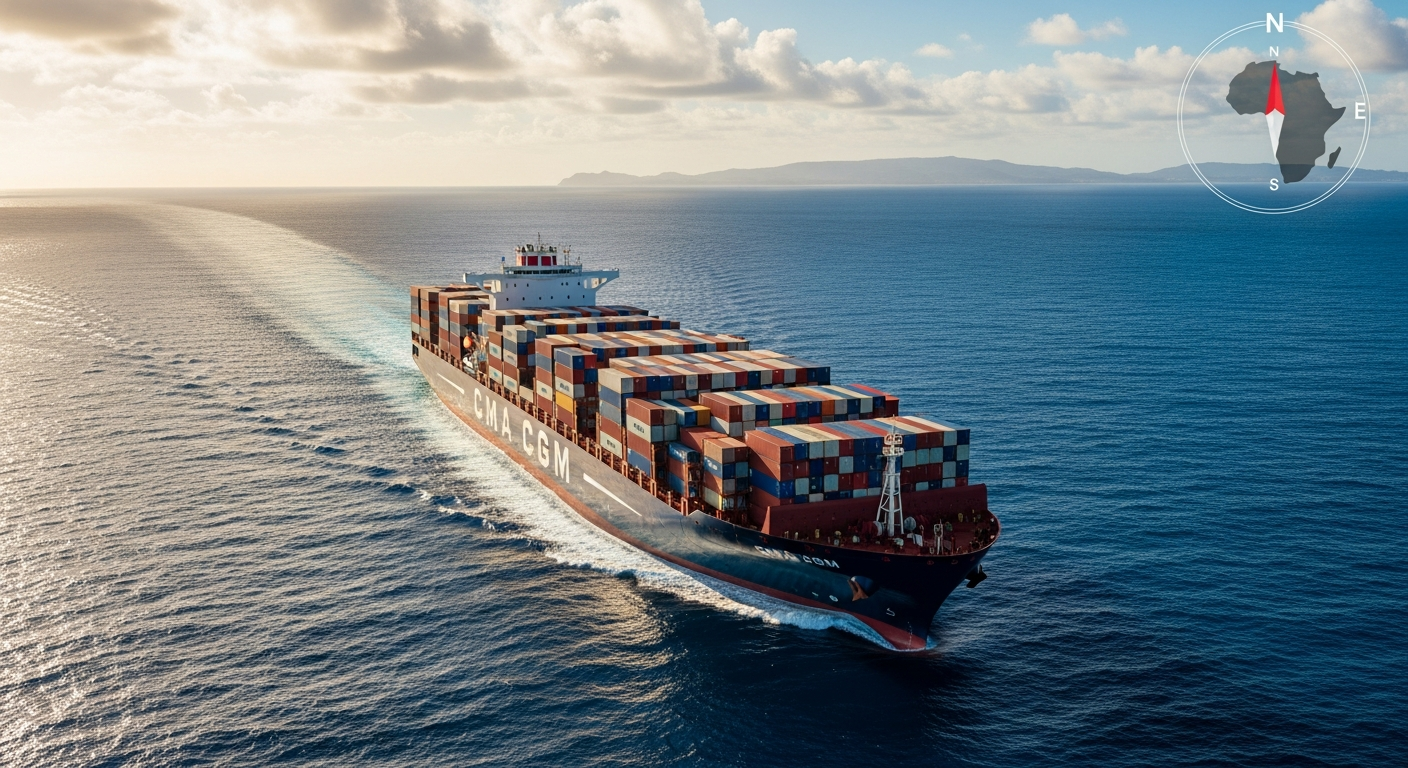
In the dynamic world of international maritime trade, route planning remains one of the most critical decisions for shipping companies, directly affecting vessel schedules, fuel consumption, crew safety, and overall operational efficiency. French shipping giant CMA CGM has recently announced a significant adjustment to its network: several major services will once again divert around the Cape of Good Hope instead of transiting the Suez Canal.
This decision comes after a brief period of cautious testing of the Red Sea and Suez Canal route. Following nearly two years of disruptions triggered by security threats in the Red Sea region, many carriers, including CMA CGM, had begun limited trials with naval escorts. In late 2025, the company successfully sent large container vessels through the canal, including high-profile transits, and planned to gradually increase usage for certain Asia-Europe and other trades.
However, citing a complex and uncertain international environment, CMA CGM has chosen to prioritize safety and schedule reliability. The rerouting specifically impacts three key services:
- French Asia Line 1 (FAL 1)
- French Asia Line 3 (FAL 3)
- Mediterranean Club Express (MEX)
These loops, which connect major Asian ports with European and Mediterranean destinations, will now follow the longer southern African route. The change reverses recent progress toward restoring full Suez transits and adds approximately 7-10 days to voyage times compared to the canal shortcut, depending on the specific loop and weather conditions.
For seafarers, such rerouting decisions highlight several important operational realities. Longer voyages around the Cape increase fuel demands and extend time at sea, requiring careful voyage planning, bunker management, and crew rotation scheduling. Mariners must prepare for potentially rougher weather in the Southern Ocean, stronger currents, and extended periods without port calls. On the positive side, the Cape route avoids high-risk areas, reducing threats to vessel and crew security.
The background to this shift traces back to late 2023, when attacks on commercial shipping in the Red Sea, linked to regional conflicts including the situation in Gaza, forced widespread diversions. A temporary ceasefire and reduced incidents in late 2025 raised hopes for a return to normal Suez traffic. CMA CGM tested escorted passages and even considered regular transits for services like India to the U.S. East Coast. Yet renewed concerns, including regional unrest and potential escalations, prompted the company to scale back.
CMA CGM emphasized that it continuously monitors developments and will reassess routing as conditions evolve. This cautious, review-based approach reflects best practices in risk management that all navigating officers and fleet managers should adopt: always evaluate real-time intelligence, security advisories, and company policies before entering sensitive areas.
Interestingly, not all carriers follow the same strategy. For example, Maersk recently confirmed a structural return to the Suez Canal for one of its Middle East-India-U.S. East Coast services, showing varied risk assessments across the industry. Such differences underscore the importance for seafarers to stay informed about their specific employer's policies and global trade lane updates.
The Suez Canal remains a vital artery for world trade, shortening distances between Asia and Europe by thousands of nautical miles and reducing transit times, emissions per voyage, and costs. However, when geopolitical factors introduce uncertainty, safety takes precedence. Tools such as diversion trackers and security bulletins help professionals anticipate changes and adapt plans accordingly.
This development serves as a timely reminder for maritime professionals: flexibility, situational awareness, and preparedness are essential in modern shipping. Whether on the bridge or in fleet operations, understanding how global events influence routing choices directly supports safer and more efficient voyages.
Resource: Original information adapted from Marine Insight
There are no comments.
Similar Posts
-
Navigating Modern Maritime Threats: Essential Lessons for Seafarers
Oct. 1, 2025, 8:13 a.m.
-
Maritime Security and the Shadow Fleet: Swedish Authorities Intervene in Baltic Sea Case
May 4, 2026, 6:33 p.m.
-
Restricted Access in the Strait of Hormuz: How a Double Blockade Limits Commercial Shipping
April 15, 2026, 6:25 p.m.