
June 24, 2026, 5:38 p.m.
Introduction for Maritime Professionals
The maritime industry is undergoing a massive transformation driven by strict global decarbonization goals. For modern seafarers, marine engineers, and officers in training, staying ahead of technological shifts is essential. A historic milestone has been reached in this journey: the certification of the world's first large-scale marine engine operating completely on hydrogen.
This breakthrough signifies that the era of zero-emission commercial shipping is no longer a distant concept. It is becoming a reality that will soon redefine the technical landscape of engine rooms across the globe.
Technical Specifications and Certification
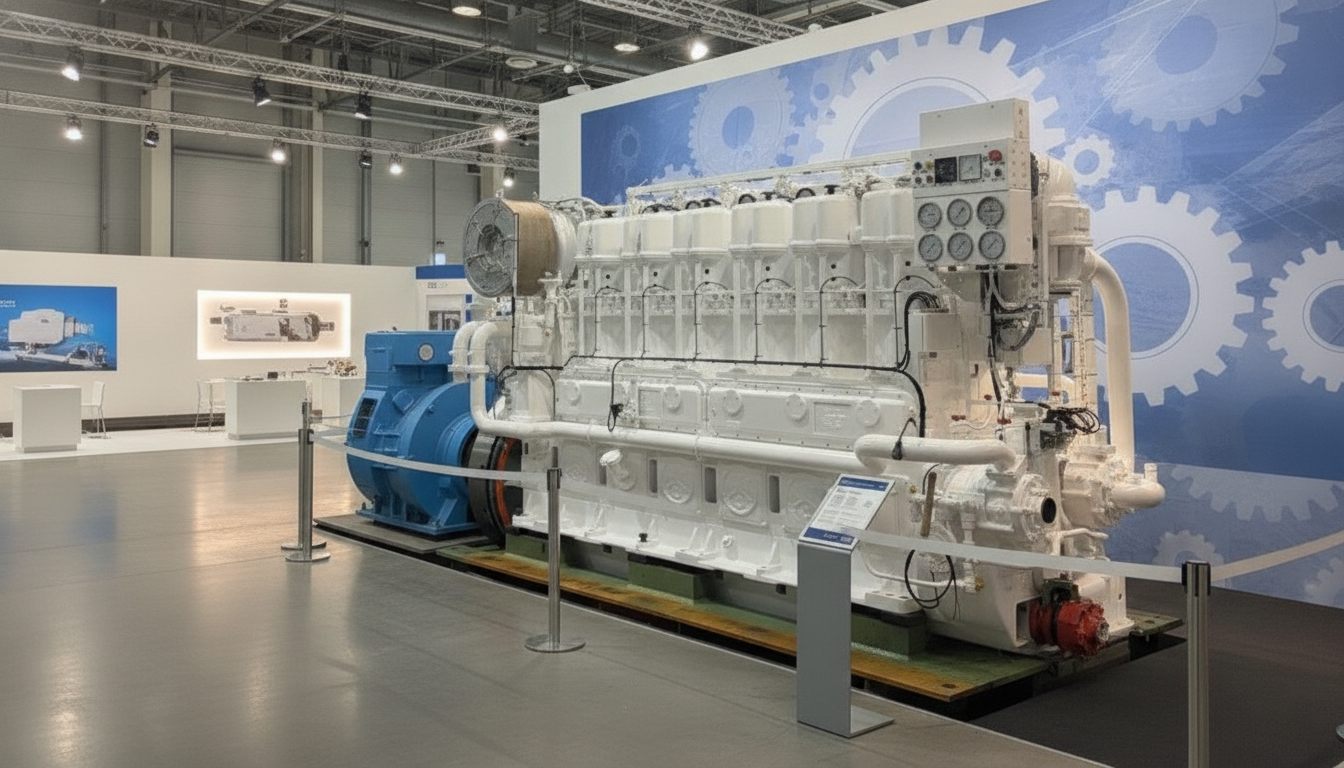
The pioneering engine was developed by BeHydro, a joint venture between Anglo Belgian Corporation (ABC) and Compagnie Maritime Belge (CMB). Following rigorous testing at the ABC Engines facility in Ghent, Belgium, the system was officially awarded a Type Approval Certificate by Lloyd's Register.
Unlike previous dual-fuel systems, this innovative engine utilizes spark-ignition technology to run on 100 percent hydrogen. It requires no conventional pilot diesel fuel to initiate combustion. The certified design delivers a versatile power output spanning from 900 kilowatts to 2,670 kilowatts, making it suitable for a wide range of coastal vessels, tugs, ferries, and inland shipping applications.
Impact on Marine Engineering and Engine Room Operations
For marine engineers, the transition from heavy fuel oil or LNG to pure hydrogen brings fundamental operational changes.
- Elimination of Greenhouse Gases: The primary benefit of this spark-ignition hydrogen engine is the complete elimination of carbon dioxide, sulfur oxides, and particulate matter. The single byproduct of the combustion process is pure water vapor.
- Fuel Handling and Storage: Hydrogen presents unique properties, including high diffusivity and a wide flammability range. Engineering crews will need specialized training in cryogenics, high-pressure gas storage, and advanced ventilation systems.
- No Rare-Earth Materials: The design avoids reliance on scarce minerals often required by fuel-cell technologies. This simplifies the manufacturing supply chain and ensures a more traditional, robust mechanical architecture that marine engineers can maintain using familiar mechanical principles.
Future Outlook for Seafarers
As international maritime regulations tighten, the demand for crew members certified in alternative fuel systems will grow exponentially. The BeHydro engine demonstrates that internal combustion technology can adapt to the green era without requiring a total shift to complex fuel cell setups.
Competent seafarers who familiarize themselves with hydrogen combustion dynamics, safety protocols, and fuel management systems today will be highly competitive in tomorrow's job market.
Resource: Based on official industry reports from Lloyd's Register and BeHydro technical data.
There are no comments.
Similar Posts
-
Human Capital in the Green Transition: Preparing the Future Maritime Workforce
May 25, 2026, 6:31 p.m.
-
Cruise Sector Revival: Attracting Younger Guests with Eco-Friendly Innovations
Nov. 5, 2025, 8:19 a.m.
-
Enhancing Voyage Planning: Introducing Sofar's Advanced Simulation Software
Oct. 3, 2025, 11:15 a.m.
-
Panama Canal Enhances Booking System for Improved Reliability and Adaptability
Sept. 30, 2025, 7:22 a.m.