Nov. 17, 2025, 4:32 p.m.
Introduction to a New Era in Maritime Operations
In the ever-evolving world of maritime activities, technology continues to play a pivotal role in ensuring safety, efficiency, and security at sea. For seafarers, who navigate vast oceans and coastal waters daily, the integration of advanced tools can mean the difference between routine operations and critical interventions. A groundbreaking development from Cyprus highlights this progress: researchers at the Cyprus Marine and Maritime Institute (CMMI) have pioneered unmanned sea vessels, commonly known as sea drones, designed to bolster defense capabilities while offering practical applications for civilian maritime tasks. These innovations are not just about military strength; they hold immense potential for training and operational support in the maritime sector, making them a topic of interest for sailors, ship officers, and maritime educators worldwide.
Established in 2020 amid global challenges like the pandemic, CMMI has grown rapidly into a hub of excellence for marine research and technological advancement. Located in Larnaca, the institute now employs over 65 professionals across multiple facilities and leads Europe in scientific publications related to maritime science, surpassing the continental average by 175 percent. This achievement underscores Cyprus's commitment to leveraging its strategic island position to foster innovations that address real-world maritime needs. For those training future seafarers, understanding these technologies can enhance curricula on navigation, surveillance, and emergency response, preparing students for a digitized maritime future.
The Birth of Nautonomy Ltd: From Research to Commercial Reality
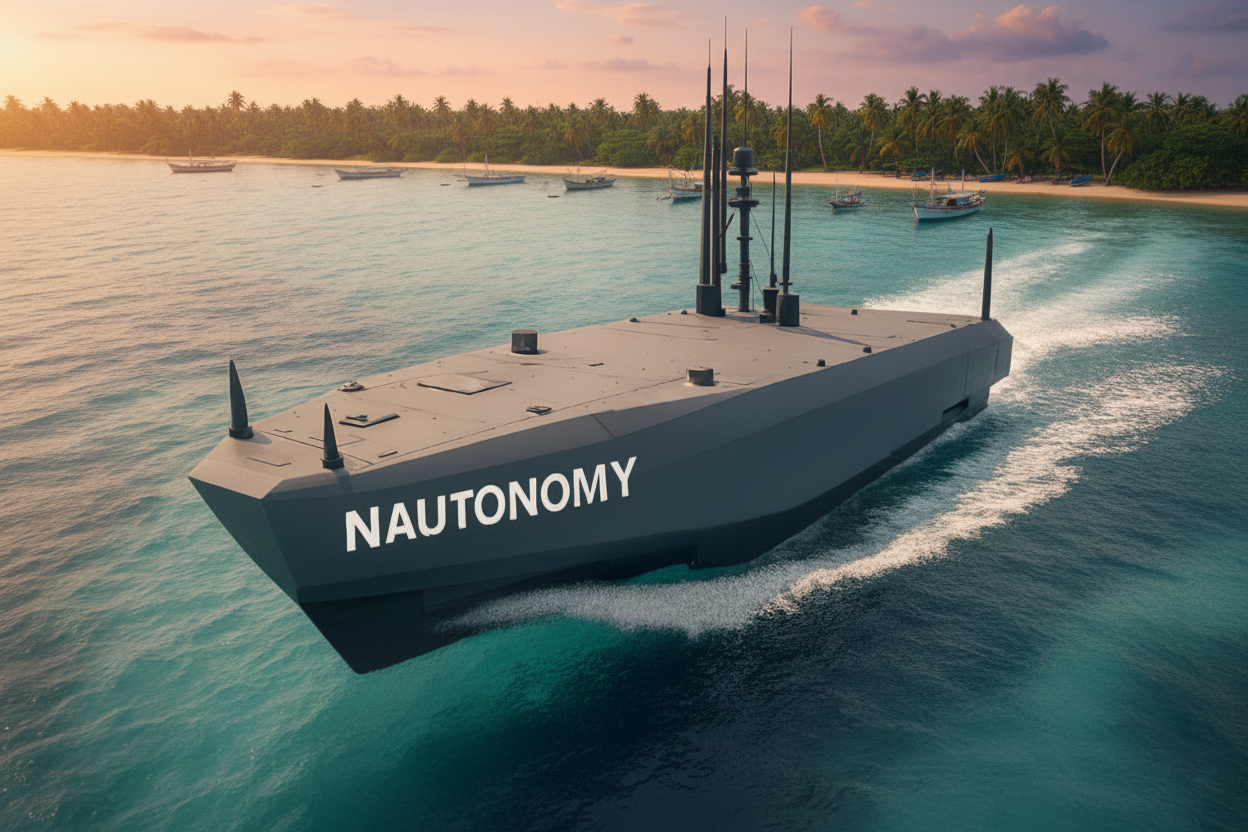
At the heart of this initiative is Nautonomy Ltd, CMMI's inaugural commercial spinout launched in September. This company represents a seamless transition from academic research to market-ready products, focusing on autonomous and intelligent maritime systems. Nautonomy specializes in producing unmanned surface and underwater vessels, which can operate independently or under remote supervision, transforming how maritime boundaries are patrolled and resources are monitored.
CMMI's CEO, Zacharias Siokouros, emphasizes the timeliness of this venture. "This sector is expanding globally at a remarkable pace, and Cyprus is keeping stride, unlike in areas such as armored vehicles or aviation where we face limitations," he notes. Unlike building large-scale hardware, developing these sea drones aligns perfectly with Cyprus's strengths in software, electronics, and marine expertise. The institute has long invested in robotics and autonomous navigation, licensing its technologies to entrepreneurs who can bring them to fruition. Siokouros adds that initial deployments could support local agencies like the Cyprus Police, the Defense Ministry, and the Joint Rescue Coordination Centre, extending to environmental monitoring and the safeguarding of protected marine zones.
The visit by André Denk, director of the European Defence Agency, to CMMI's Oroklini facility further validates these efforts. Briefed on the prototypes and production plans, Denk expressed enthusiasm for the potential integration into regional defense strategies. Discussions with the Defense Ministry are already underway, signaling strong governmental backing. For maritime training programs, this collaboration model offers valuable lessons in how public-private partnerships can accelerate tech adoption, from simulation-based exercises to hands-on drone operation modules.
Leadership and Expertise Driving the Innovation
Nautonomy's leadership team brings a wealth of experience from Cyprus's burgeoning tech landscape. Co-founders Christos Keleshis, an electrical engineer, and Christos Constantinides, a software specialist, previously collaborated at the Cyprus Institute on aerial drone projects supplied to the Forestry Department and National Guard. Their shift to maritime applications was inspired by CMMI's commercialization opportunities. Keleshis reflects, "After more than a decade in drone development, discovering CMMI's focus on turning prototypes into viable products was a game-changer. Our aim is to empower our engineers by ensuring their innovations reach operational seas."
Constantinides, who spent seven years honing software solutions, shares a similar vision. "This is about contributing to our nation's capabilities and positioning Cypriot tech on the global stage," he says. Andri Theodourou serves as company secretary, providing administrative and strategic support. Together, they are building a framework where sea drones are not isolated gadgets but integrated systems, complete with control software and vessel hardware. This holistic approach is particularly relevant for seafarer education, where courses on unmanned systems can now include case studies from Nautonomy, teaching integration with traditional vessel operations.
Technical Features and Operational Versatility
What sets these sea drones apart is their adaptability to diverse maritime scenarios. The vessels support dual control modes: direct remote operation via handheld devices or advanced computer-based autonomy, allowing for missions ranging from hours to multi-day endurance based on propulsion choices. Power sources include conventional fuels for reliability or eco-friendly, zero-emission options to align with international sustainability goals, a key consideration in modern maritime training that emphasizes green practices.
In practice, these drones excel in remote surveillance tasks critical to seafarers' safety. They can monitor national borders, detect unauthorized entries such as migrant crossings, and protect vital infrastructure like offshore platforms or ports. For search-and-rescue operations, their ability to deploy quickly without risking human lives adds a layer of preparedness that training simulations can replicate. Constantinides explains, "The package we offer combines the vessel with its intelligent control system, customizable through partnerships with local boat builders if needed." This modularity ensures scalability, from small coastal units for training exercises to larger fleets for fleet-wide security.
Market feedback has been encouraging. Keleshis reveals that preliminary research has attracted interest from international firms struggling with existing drone limitations. "We've analyzed global needs and found Cyprus can compete effectively, even without massive industrial bases," he states. Constantinides concurs, noting that field visits abroad revealed Cypriot solutions are on par or superior in key areas like software reliability. For maritime learners, these insights highlight the importance of adaptability in tech-driven roles, such as drone-piloting certifications or cybersecurity for unmanned assets.
Implications for Seafarer Training and Global Maritime Security
As Nautonomy scales production, the ripple effects on seafarer education are profound. Imagine integrating sea drone modules into cadet programs: virtual reality simulations of autonomous patrols, workshops on interfacing drones with AIS (Automatic Identification System) for collision avoidance, or ethical discussions on AI decision-making in distress scenarios. These tools not only enhance defensive postures but also promote proactive safety, reducing the human element's exposure to hazards like rough seas or hostile environments.
Cyprus's model—fostering innovation through institutes like CMMI—serves as a blueprint for other maritime nations. By prioritizing areas of national strength, such as software and niche hardware, smaller economies can punch above their weight. Future plans include securing funding for expanded R&D, forging export deals, and collaborating with international bodies to standardize unmanned vessel protocols. This forward-thinking approach ensures that tomorrow's seafarers are not just navigators but tech-savvy guardians of the seas.
In conclusion, the advent of Cypriot sea drones marks a milestone in blending research with real-world maritime demands. For an industry where vigilance is paramount, these innovations promise safer voyages and more resilient operations. As training institutions adapt, incorporating such technologies will equip the next generation to thrive in an interconnected ocean domain.
Source: Adapted from an article by Maritime Cyprus, November 3, 2025.
There are no comments.
Similar Posts
-
Maritime Security and the Shadow Fleet: Swedish Authorities Intervene in Baltic Sea Case
May 4, 2026, 6:33 p.m.
-
Restricted Access in the Strait of Hormuz: How a Double Blockade Limits Commercial Shipping
April 15, 2026, 6:25 p.m.
-
US Naval Blockade of Iranian Ports Enters Second Day as Peace Talks Show Signs of Progress
April 14, 2026, 5:40 p.m.