
Nov. 5, 2025, 8:12 a.m.
Introduction: A Storm Brewing on the High Seas
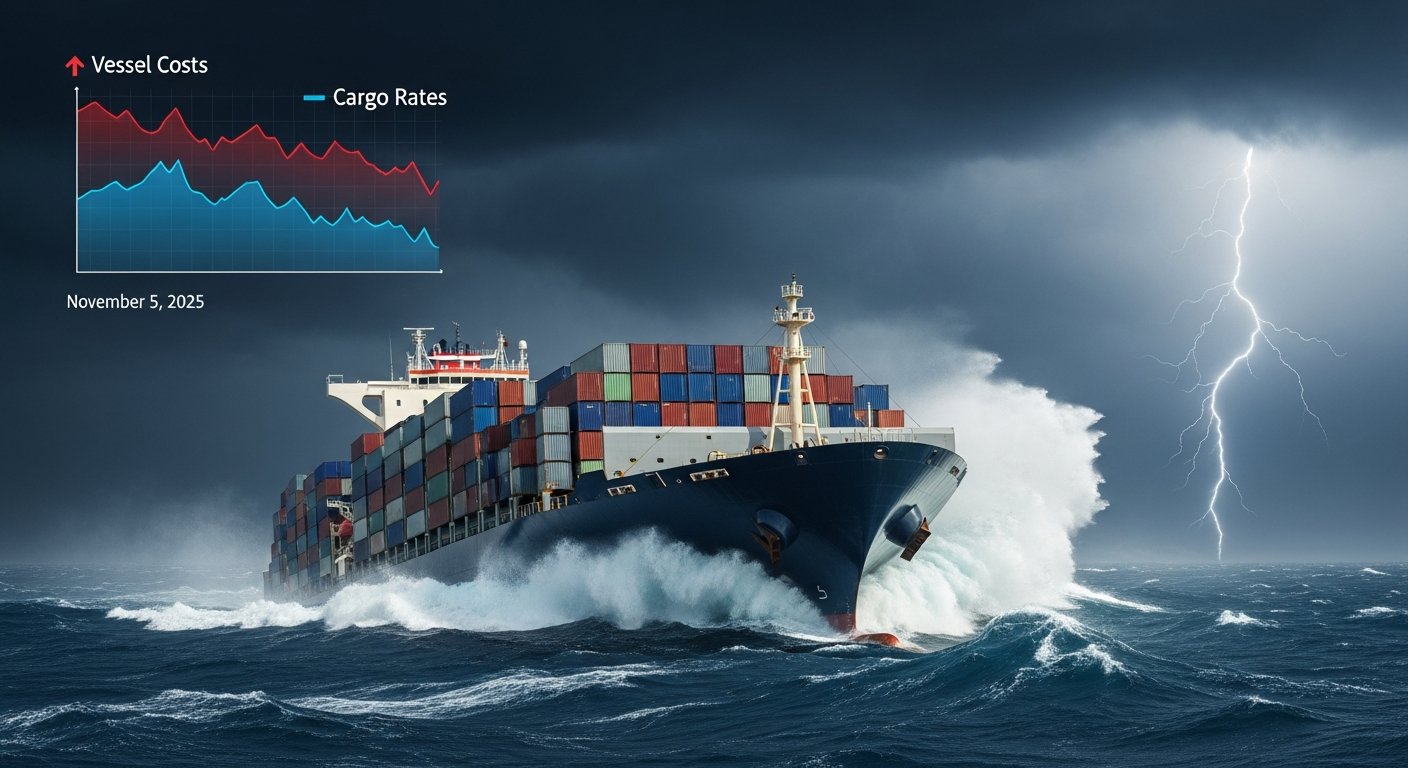
As seafarers navigating the vast oceans, you are on the front lines of the global trade ecosystem. The container shipping industry, which moves over 90% of the world's non-bulk cargo, is currently experiencing a paradoxical upheaval: new vessels are hitting record-high prices due to construction delays and surging demand, while freight rates for containers are plummeting to levels not seen in years. This "turbulence" stems from a mix of geopolitical tensions, economic slowdowns, and supply chain realignments, creating operational headaches for crews, captains, and shore-side managers alike.
For maritime trainees and seasoned officers, understanding this dynamic is crucial. It affects everything from vessel chartering decisions to fuel efficiency planning and crew rotations. In this article, we'll break down the key drivers, impacts on daily operations, and practical takeaways to help you anticipate shifts in the sector. By grasping these trends, you'll be better equipped to discuss them during safety briefings or port state control inspections, demonstrating your awareness of broader industry challenges.
The Surge in Shipbuilding Costs: Why Vessels Are Priced Like Luxury Yachts
The cost of acquiring a new container ship has skyrocketed, with prices for a standard 8,000 TEU (Twenty-foot Equivalent Unit) vessel now exceeding $150 million, up 20-30% from pre-2024 levels. Several factors fuel this escalation.
First, persistent supply chain disruptions in shipyards, particularly in China and South Korea, which dominate 80% of global newbuild orders, have led to steel shortages and labor bottlenecks. The COVID-19 aftermath lingered into 2025, with yard queues stretching 18-24 months for deliveries. Add to this the stringent environmental regulations from the International Maritime Organization (IMO), mandating low-sulfur fuels and ballast water treatment systems, which inflate construction expenses by 15-20%.
Geopolitical ripples exacerbate the issue. Ongoing Red Sea conflicts, forcing vessels to reroute around Africa's Cape of Good Hope, have increased wear on hulls and engines, accelerating the scrapping of older ships. This tightens the supply of available tonnage, pushing up second-hand prices as well. For instance, a 10-year-old 5,000 TEU ship now fetches $40-50 million, compared to $25 million just two years ago.
From a seafarer's perspective, this means more time at sea on aging or hastily retrofitted vessels. Crews may face extended voyages to compensate for fewer ships, heightening fatigue risks under the Maritime Labour Convention (MLC) guidelines. Captains should monitor hull integrity closely during these longer hauls, as the added distance can strain structural welds.
Freight Rates in Freefall: Cheap Cargo in an Expensive Fleet
While ships get pricier, the rates shippers pay to load cargo are crashing. Spot rates on major routes like Asia-Europe have dipped below $1,000 per FEU (Forty-foot Equivalent Unit) in late 2025, a 70% drop from the 2024 peaks triggered by Red Sea diversions. Transpacific rates follow suit, hovering at $1,500-$2,000, down from $10,000 highs.
Why the nosedive? Overcapacity looms large. Despite high newbuild costs, carriers ordered aggressively during the 2021-2023 boom, adding 2.5 million TEU of capacity annually. Now, with global trade growth stalling at 1-2% due to economic headwinds in Europe and the U.S., empty containers are piling up at ports. China's manufacturing slowdown, hit by domestic consumption slumps and export tariffs, has flooded markets with unsold goods, forcing carriers to slash rates to fill berths.
Blank sailings—where ships skip ports to consolidate loads—are back, reducing effective capacity utilization to 85%. For deck officers, this translates to lighter loads, improving stability but complicating trim and ballast calculations. Engineers might see underutilized engines, potentially leading to cost-cutting on maintenance— a red flag for safety drills.
This imbalance squeezes carrier profits, with lines like Maersk and MSC reporting 40% revenue drops quarter-over-quarter. Crews could feel the pinch through delayed bonuses or shorter contracts, underscoring the need for diversified skills like hybrid propulsion training to stay employable.
Operational Impacts: Navigating the Chaos at Sea
The dissonance between expensive ships and cheap freight creates ripple effects across vessel operations. Fuel costs, now 40% of voyage expenses, remain volatile despite lower loads, as longer routes burn more bunker oil. Seafarers must optimize speed profiles using tools like just-in-time arrivals to avoid anchorage waits at congested hubs like Singapore or Rotterdam.
Port rotations are erratic too. With rates low, shippers delay shipments, leading to unpredictable berthing slots. Bridge teams should hone ECDIS (Electronic Chart Display and Information System) proficiency for dynamic rerouting, especially with AIS (Automatic Identification System) data showing clustered traffic around chokepoints.
Environmentally, the push for greener fleets amid high costs means more LNG or methanol retrofits. Cadets training on these systems should prioritize gas-safe practices, as leaks pose explosion risks in confined engine rooms.
Safety-wise, the chaos amplifies human error potential. Fatigue from extended transits violates STCW (Standards of Training, Certification and Watchkeeping) rest hours, so watchkeepers must log deviations meticulously for flag state audits.
Lessons for Seafarers: Charting a Course Through Uncertainty
This market turbulence offers teachable moments for maritime professionals. First, embrace digital tools: Voyage data recorders (VDRs) can analyze efficiency metrics, helping chief mates justify fuel-saving maneuvers to charterers.
Second, stay informed on trade forecasts. Platforms like Clarksons Research provide TEU demand projections, aiding in crew briefings on expected load factors.
Finally, adaptability is key. Cross-training in cargo securing for variable weights prepares bosuns for uneven container stacks, reducing lashing failures in rough seas.
In summary, the container market's current state—high vessel costs clashing with bargain freight—signals a sector in flux. For seafarers, it's a call to vigilance: monitor trends, prioritize safety, and upskill relentlessly. By doing so, you'll not only weather the storm but emerge as indispensable assets in global logistics.
There are no comments.
Similar Posts
-
International Regulations for Safe and Efficient Container Shipping at Sea
Feb. 16, 2026, 7:31 a.m.
-
CMA CGM Decides to Reroute Key Services via Cape of Good Hope Due to Ongoing Geopolitical Risks
Jan. 29, 2026, 11:08 a.m.
-
Streamlining Container Shipping: Coneksion's Connectivity Boost for Ship Angel Platform
Nov. 24, 2025, 5:48 p.m.