Dec. 1, 2025, 5:25 p.m.
In the maritime industry, where vessels navigate unpredictable waters and face evolving threats, incidents like the recent attack on the oil tanker M/T Mersin serve as critical reminders of the need for heightened vigilance. On November 27, 2025, at around 23:45 UTC, the Panama-flagged tanker experienced multiple external explosions while anchored off the coast of Dakar, Senegal. This event, confirmed by the vessel's technical manager, Besiktas Shipping, underscores the vulnerabilities of anchored ships in regional hotspots and highlights actionable takeaways for seafarers worldwide. For aspiring and seasoned mariners, understanding such occurrences is essential to enhancing onboard preparedness and response protocols.
The M/T Mersin, a mid-sized oil tanker with a capacity for significant fuel cargoes, was stationary in the outer anchorage area near Dakar's bustling port when the blasts occurred. Shipping records indicate the vessel was laden with approximately 30,000 tons of fuel oil at the time, a detail that amplifies the potential risks involved. Eyewitness accounts and initial reports from the scene describe a sequence of four distinct detonations originating from outside the hull, which immediately compromised the ship's structural integrity. These explosions triggered a rapid influx of seawater into the engine room, leading to concerns over stability and potential listing.
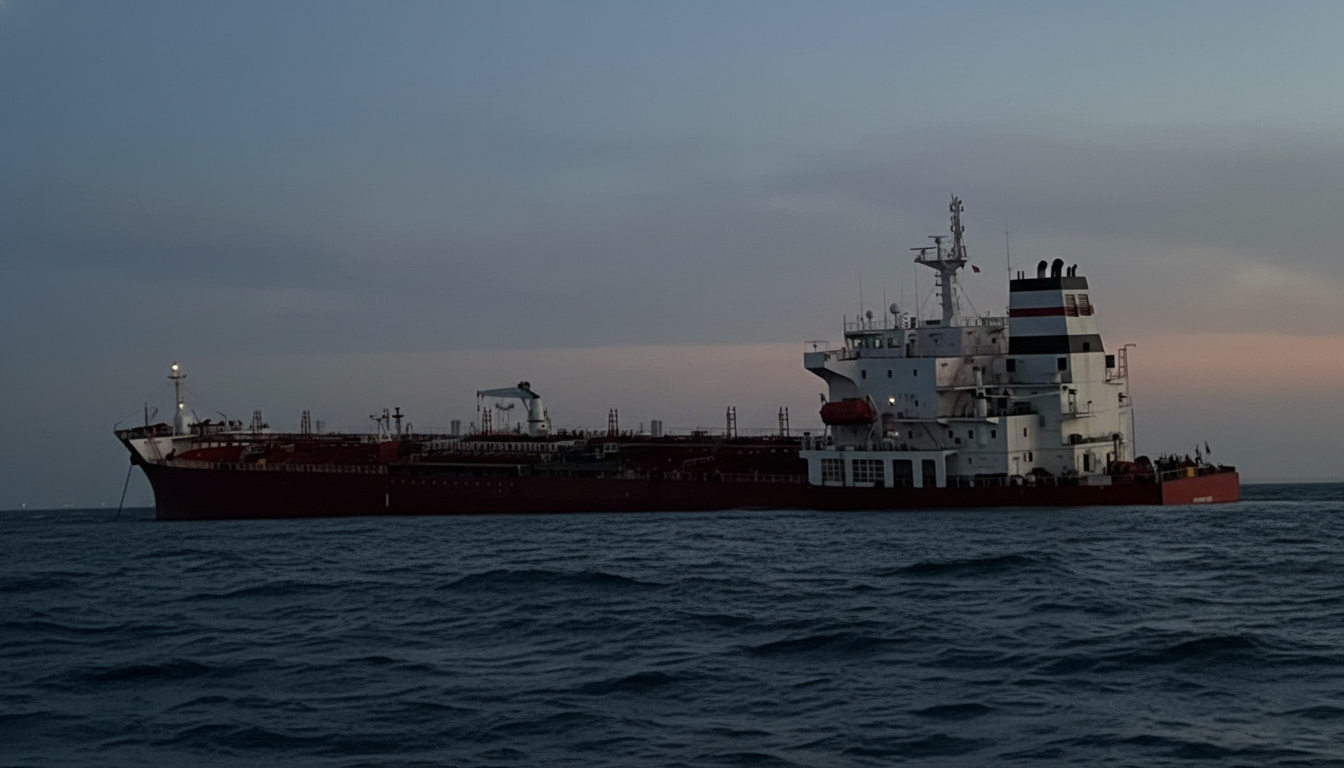
Crew members, numbering around 20 based on standard manning for similar vessels, demonstrated commendable discipline in the face of chaos. Following standard emergency procedures, they mustered at designated points, conducted headcounts, and initiated abandon-ship drills without delay. Besiktas Shipping's statement emphasized that "the situation was swiftly managed," with all personnel evacuated safely via lifeboats to nearby support vessels. No injuries, fatalities, or environmental spills were reported, a testament to the effectiveness of routine safety training. However, the tanker's stern section sank low into the waterline, as captured in post-incident imagery, rendering it partially submerged and necessitating immediate intervention to prevent further capsizing.
Local authorities in Senegal responded with a coordinated crisis management effort, mobilizing resources from the Senegalese Navy, the National Maritime Affairs Agency, and the Port Authority of Dakar. Their priorities included containing any leakage risks by deploying containment booms around the affected area and preparing protocols for offloading the remaining cargo under controlled conditions. International support arrived promptly, with a French Navy ship providing technical assistance for damage assessment and salvage operations. Investigators from forensic teams, insurers, and regional maritime bodies are now on site, piecing together evidence to determine the blasts' origins. While preliminary findings point to deliberate external interference, no definitive claims have been made, and the probe remains ongoing.
For maritime trainees and officers, this incident offers a stark case study in threat assessment and mitigation. Anchored positions, often seen as safe havens during port approaches, can expose ships to asymmetric risks, particularly in geopolitically sensitive regions like West Africa. The M/T Mersin's history of carrying sanctioned cargoes, including Russian-origin oil as tracked by data firm Kpler, places it within the broader context of the so-called "shadow fleet" vessels that skirt international regulations. This affiliation, while not directly implicated, illustrates how commercial operations can intersect with global tensions, echoing recent drone strikes on tankers in the Black Sea. Though no links have been established between those events and this one, the temporal proximity serves as a wake-up call for crews to integrate geopolitical intelligence into daily briefings.
From a technical standpoint, the flooding of the engine room highlights the fragility of propulsion systems to percussive damage. Seafarers should prioritize watertight integrity checks during anchorage, ensuring that all compartments are secured and bilge pumps are primed for rapid activation. Emergency generators, often isolated in lower decks, must be inspected for quick startup capabilities to maintain power for communications and lighting during evacuations. Moreover, the absence of pollution in this case owes much to preemptive measures like double-hull designs mandated by SOLAS conventions, but crews must still drill on spill response, including the use of absorbent materials and reporting chains to flag states.
Training implications extend to simulation exercises. Bridge teams could benefit from scenario-based drills simulating external blasts, focusing on collision avoidance radars tuned for small, fast-moving threats and the activation of ship security alerts via SSAS (Ship Security Alert System). Deck officers, in particular, should review ISPS Code compliance, ensuring that watchstanding rotations include vigilant monitoring of the 360-degree perimeter. For engineering staff, the engine room ingress underscores the value of remote monitoring tools and automated shutdowns to limit secondary flooding.
As the investigation unfolds, maritime educators can leverage this event to foster a culture of proactive risk management. Crews are encouraged to log anomalies in voyage reports, such as unusual vessel traffic or radio chatter, contributing to collective industry awareness. Besiktas Shipping's cooperation with authorities exemplifies the importance of transparent communication, which not only aids probes but also builds trust with insurers for swift claims processing.
In summary, the Mersin incident, while resolved without loss, reveals the thin line between routine operations and crisis. By dissecting such events, future mariners can sharpen their skills, turning potential disasters into opportunities for resilience. As global trade routes face increasing scrutiny, staying informed and prepared remains the mariner's best defense.
**Source:** Adapted from gCaptain.com report by Mike Schuler, December 1, 2025.
There are no comments.
Similar Posts
-
Maritime Security and the Shadow Fleet: Swedish Authorities Intervene in Baltic Sea Case
May 4, 2026, 6:33 p.m.
-
Two US-Seized Venezuelan Oil Tankers Reappear Off Puerto Rico After Brief Disappearance
Jan. 22, 2026, 6:01 p.m.
-
Ship's Safety Officer: Duties and Rights
July 29, 2025, 9:33 p.m.