Dec. 3, 2025, 10:48 p.m.
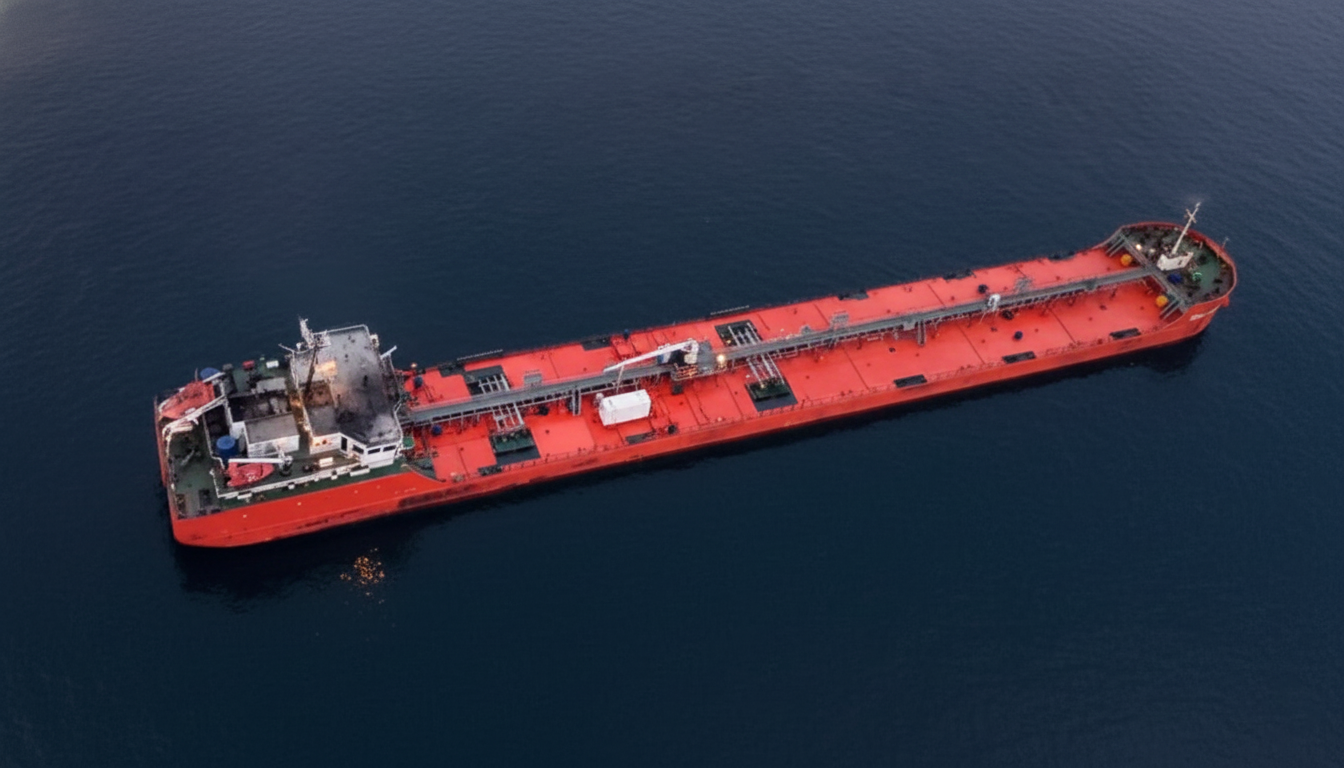
The Russian government announced on December 2, 2025 that a product tanker, identified as Midvolga-2 (3,500 dwt), suffered damage from an explosive maritime drone while transiting the Kerch Strait approaches in the northern Black Sea. Russian sources claim the unmanned surface vessel detonated against the starboard side, causing a fire in the engine room and minor flooding. The crew extinguished the flames, and the ship was towed to port with no injuries or pollution reported. Ukraine has officially denied any involvement and stated it has no information about the incident.
Regardless of the true origin of the attack, the event highlights two growing realities that every professional mariner must now include in risk assessments: the rapid evolution of asymmetric naval drone warfare and the parallel rise of deliberate disinformation as a tactical tool.
Incident Details and Immediate Response
According to Russian statements, the attack occurred at approximately 04:00 local time when the tanker was about 12 nautical miles south of the Crimean Bridge. The vessel was carrying 4,000 tons of fuel oil from Rostov to an undisclosed destination. Video circulated by pro-Russian channels shows a small fast craft approaching at speed before a bright flash and plume of smoke. Russian naval units reportedly arrived within hours and provided escort during the tow to Temryuk.
From a seamanship perspective, several points stand out for training purposes:
- Engine-room fires triggered by external explosions remain one of the most dangerous scenarios on tankers. The crew’s ability to contain the blaze without external firefighting support demonstrates effective damage-control organization and regular drills.
- The absence of oil spill, despite hull penetration, suggests that modern double-hull construction and proper cargo tank segregation continue to provide critical environmental protection even under attack.
- Night-time detection of small, low-profile USVs (unmanned surface vehicles) remains extremely difficult with standard radar alone. Visual lookouts and thermal cameras are now essential equipment in high-threat areas.
The New Threat Environment: Maritime Drones Enter Mainstream Warfare
Since 2022, both Russia and Ukraine have deployed sea drones ranging from 5 to 18 meters in length, capable of carrying 200–1,000 kg warheads and traveling hundreds of miles autonomously or under satellite control. These weapons have sunk or disabled patrol boats, damaged the Crimean Bridge, and now repeatedly targeted commercial shipping. For merchant crews, this means:
- Traditional anti-piracy measures (razor wire, water cannons, citadels) are largely ineffective against explosive drones. Speed reduction or course changes may not outmaneuver a drone closing at 40+ knots. Bridge teams must treat any small craft closing at high speed as a potential threat, day or night.
Training syllabi should now include recognition cues for USVs, emergency maneuvering to present the stern, and rapid activation of fire pumps and CO2 systems.
Information Warfare: When the First Casualty is the Truth
A notable feature of this incident is the immediate denial from Kyiv and the absence of any claim of responsibility, unlike most previous drone strikes on military targets. This creates a fog of uncertainty that itself becomes a hazard for navigators. Masters and companies must now make voyage decisions based on conflicting narratives:
- Transit a strait declared “safe” by one side but actively mined or drone-patrolled by the other?
- Accept military escort that may make the vessel a higher-value target?
- Rely on official NOTICES TO MARINERS that may be politically filtered?
The practical lesson is clear: never base security decisions on a single source. Cross-check reporting from UKMTO, NATO Shipping Centre, commercial intelligence providers, and even open-source satellite imagery when possible.
Actionable Training Takeaways for Tomorrow’s Officers and Crew
- Include USV attack scenarios in every Ship Security Plan review for Black Sea, Red Sea, and Persian Gulf trades.
- Practice “ram or evade” decision-making drills: at what range do you attempt to turn the stern versus maintain course and prepare for impact?
- Train engineers to isolate ventilation and fuel systems within 60 seconds of a “drone alert.”
- Reinforce the importance of accurate and immediate reporting to UKMTO or MSCHOA, even if the flag state discourages it.
- Teach junior officers how to evaluate contradictory threat information without paralysis.
Looking Ahead
Whether this particular incident was a Ukrainian operation, a Russian false-flag action, or something else entirely, the threat to commercial shipping from low-cost, high-impact maritime drones is now permanent. The days when merchant vessels could consider themselves neutral bystanders in coastal conflicts are over. The professional mariner’s job has expanded: alongside traditional watchkeeping and cargo care, we must now master detection, evasion, and survival in a drone-saturated battlespace.
Source: from The Maritime Executive
There are no comments.
Similar Posts
-
Drone Strike on Izmail Port: Foreign-Flagged Vessels Damaged in Black Sea Corridor
April 15, 2026, 6:35 p.m.
-
Enhancing Maritime Safety: Vital Insights from IMO's 110th Maritime Safety Committee Session
Nov. 7, 2025, 3:01 p.m.
-
GPS Interference Challenges in the Gulf: Key Insights for Seafarers
Oct. 8, 2025, 2:26 p.m.