
Feb. 19, 2026, 6:43 a.m.
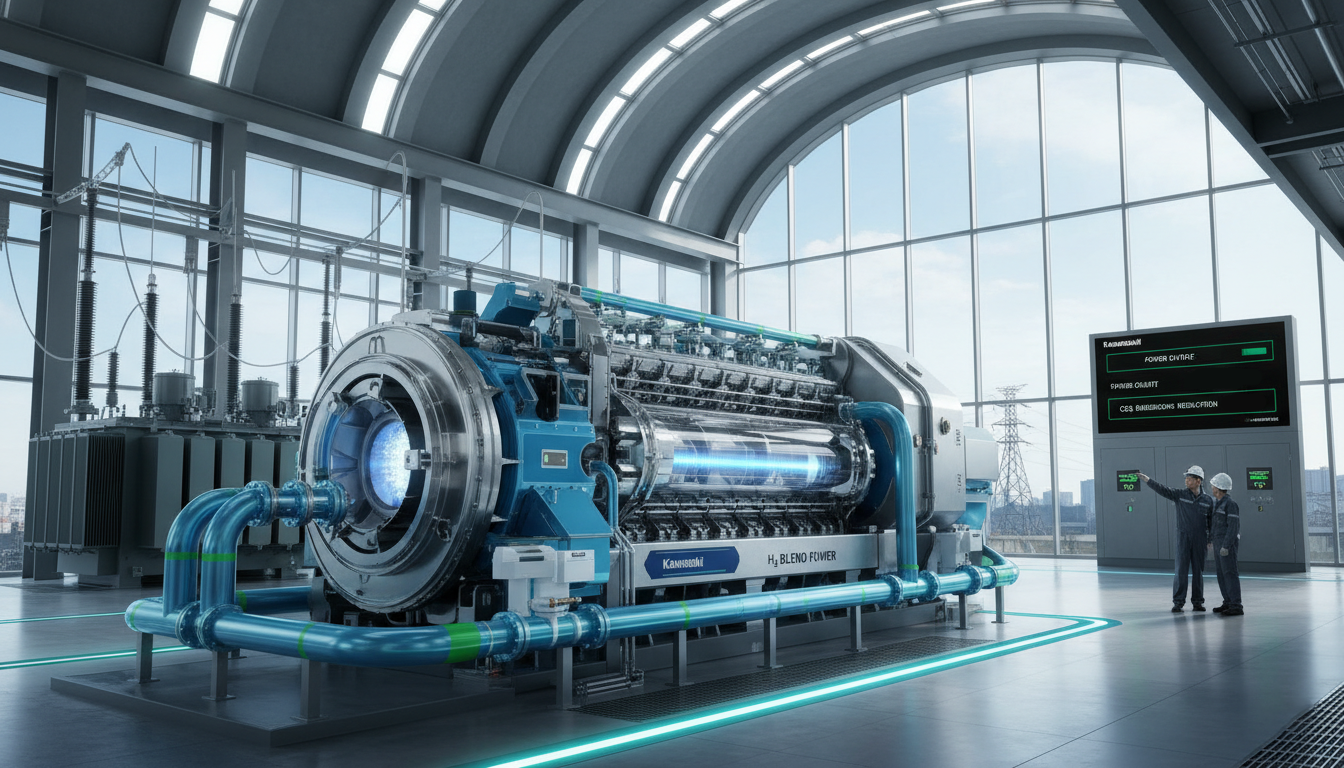
In a significant step toward reducing carbon emissions in the energy sector, Kawasaki Heavy Industries has launched the world's first commercially available large-scale gas internal combustion engine capable of operating on a fuel mixture containing up to 30% hydrogen by volume blended with natural gas. This development, part of the KG series known as the Kawasaki Green Gas Engine, offers a practical bridge to lower-emission power production while using existing infrastructure.
The engine, primarily designed for stationary power generation in the 5-8 MW class, maintains high efficiency and output comparable to traditional natural gas operation. For example, the 18-cylinder KG-18-T model delivers approximately 7.5 to 7.8 MW of electrical power at 720 or 750 rpm. After extensive operational testing from October 2024 to September 2025 at Kawasaki's Kobe facility, sales began in September 2025, complete with full manufacturer warranty, standard maintenance protocols, and enhanced safety features to handle hydrogen's unique properties, such as its tendency to leak and cause material embrittlement.
By incorporating 30% hydrogen, the engine achieves a CO2 emissions reduction of about 10-12% compared to pure natural gas combustion, without requiring major changes to fuel supply lines, storage systems, or pipelines. This makes it an attractive retrofit option for existing power plants and industrial facilities. More than 240 KG series engines have been installed worldwide since 2011, and many can be upgraded to support this hydrogen blend.
For the maritime industry, where decarbonization faces unique challenges due to strict regulations like IMO targets and the need for reliable onboard power and propulsion, this technology holds strong relevance. While the current launch focuses on land-based power generation, Kawasaki is actively advancing hydrogen applications in marine environments. The company has completed ground-based tests of medium-speed four-stroke engines using liquid hydrogen (with diesel fallback capability) and plans to introduce low-speed two-stroke hydrogen engines suitable for large vessels, such as container ships, in spring 2026.
Engineers and crew members on modern ships often deal with auxiliary power generation systems or dual-fuel setups. This hydrogen co-firing approach aligns with the gradual shift toward alternative fuels in shipping, allowing operators to start reducing emissions now while global liquid hydrogen supply chains, import terminals, and bunkering infrastructure continue to develop, likely reaching maturity in the early 2030s.
Kawasaki positions this engine as a realistic transitional solution rather than an immediate full switch to pure hydrogen. It supports Japan's ambitious carbon neutrality goal by 2050 and its heavy reliance on imported energy. By enabling partial hydrogen use today, it paves the way for higher blends or pure hydrogen in the future as production, transport, and storage technologies advance.
Seafarers and marine engineers should monitor these developments closely, as hydrogen-blended fuels could influence auxiliary engine designs, fuel management systems, and safety protocols on board vessels in the coming years.
There are no comments.
Similar Posts
-
Private Equity Firms Vie for Ownership of Everllence, Key Supplier of Marine Propulsion Engines
Feb. 19, 2026, 6:58 a.m.
-
Klaipėda Port Advances Toward Becoming the Leading Green Hydrogen Center in the Baltic Region
Nov. 25, 2025, 8:01 p.m.
-
Everllence's Dual-Fuel Engine Innovations: Paving the Way for Sustainable Maritime Propulsion
Oct. 8, 2025, 2:37 p.m.