
Feb. 9, 2026, 9:04 a.m.
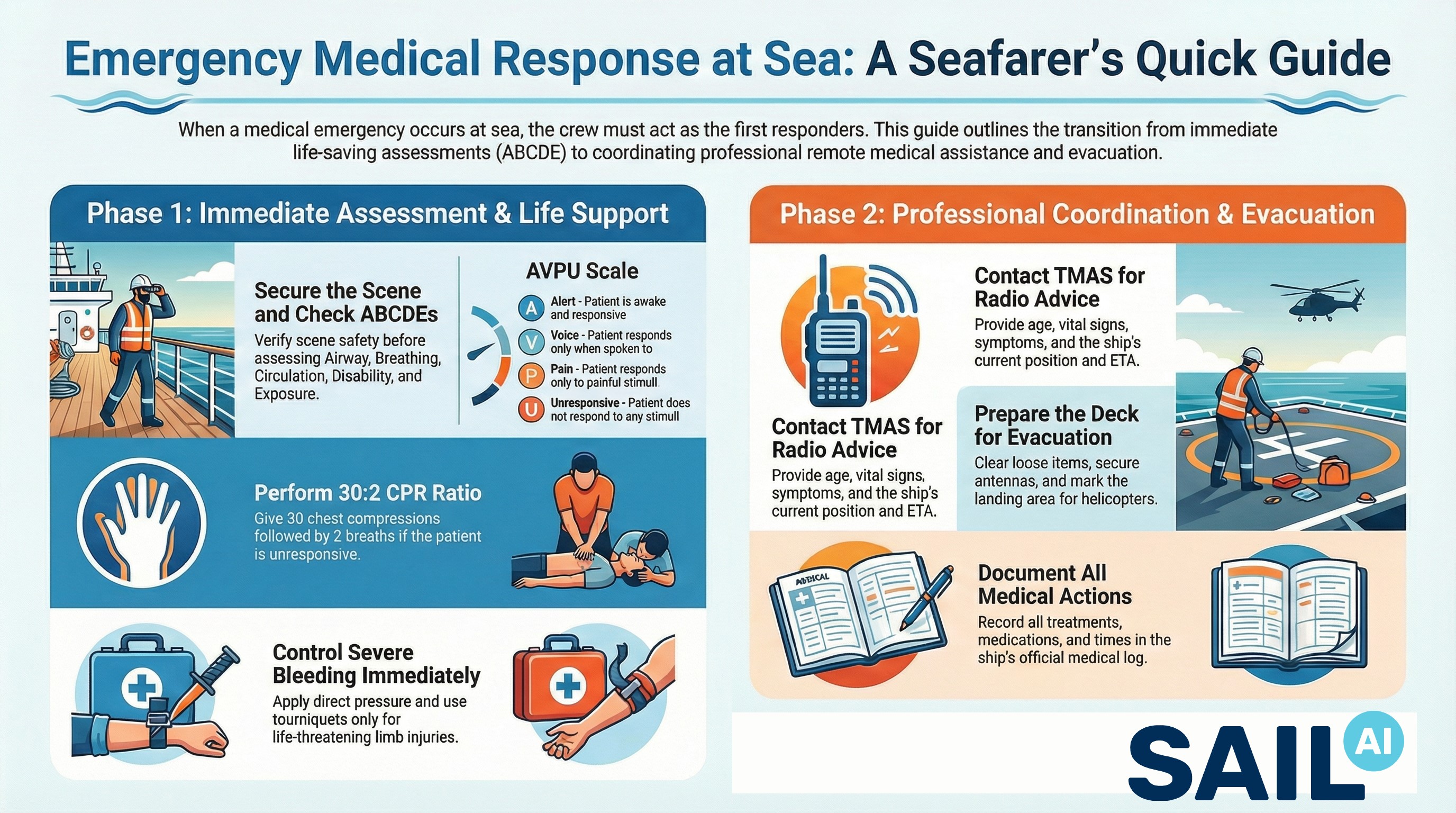
Medical emergencies at sea demand fast, calm, and correct actions. On commercial ships far from professional help, the crew must provide initial care. Every seafarer should know basic life support. Designated medical persons handle advanced steps. Follow STCW requirements and use onboard resources like the Ship Captain's Medical Guide or similar manuals.
1. Ensure Scene Safety First Your safety comes before anything else. Check for dangers like fire, toxic fumes, falling objects, or unstable surfaces. Make the area safe or move the casualty if possible without causing more harm. In enclosed spaces, follow confined space entry rules.
2. Assess the Casualty (Primary Survey - ABCDE Approach) Approach quickly but safely. Shout for help and send someone to fetch the medical kit and notify the bridge.
- A - Airway: Is the airway open? Tilt head back and lift chin (if no neck injury suspected). Remove visible obstructions.
- B - Breathing: Look, listen, feel for breathing (up to 10 seconds). If absent, start rescue breaths.
- C - Circulation: Check for severe bleeding. Feel for carotid pulse. Control major hemorrhage immediately.
- D - Disability: Quick check of consciousness (AVPU: Alert, responds to Voice, responds to Pain, Unresponsive).
- E - Exposure: Look for other injuries while preventing hypothermia.
If the person is unresponsive and not breathing normally, start CPR right away.
3. Basic Life Support (BLS) and CPR If no breathing and no pulse:
- Call for help and get the AED if available.
- Give 30 chest compressions (center of chest, 5-6 cm deep, 100-120 per minute).
- Follow with 2 rescue breaths (pinch nose, seal mouth, blow steadily).
- Continue cycles until help arrives, the person shows signs of life, or you are exhausted. Use an Automated External Defibrillator (AED) if onboard - follow voice prompts.
For choking (conscious person clutching throat):
- Encourage coughing.
- If ineffective, give up to 5 back slaps then 5 abdominal thrusts (Heimlich maneuver).
- If unconscious, start CPR.
4. Control Severe Bleeding Apply direct pressure with a clean dressing or cloth. Elevate the limb if possible. Use tourniquet only for life-threatening limb bleeding (note time applied). Pack deep wounds if trained. Treat for shock: lay flat, raise legs if no spinal injury, keep warm, nothing by mouth.
5. Manage Common Serious Conditions
- Unconscious but breathing: Place in recovery position (stable side position) to keep airway open. Monitor breathing.
- Burns: Cool with clean water for 10-20 minutes (not ice). Cover with sterile dressing. Do not break blisters.
- Fractures / Dislocations: Immobilize with splints or slings. Do not force realignment.
- Head Injury: Suspect if confused, vomiting, or loss of consciousness. Keep still, monitor for worsening.
- Chest Injuries: Position half-sitting leaning to injured side. Seal sucking wounds (occlusive dressing taped on 3 sides).
- Shock Signs (pale, cold sweat, fast weak pulse): Treat underlying cause, keep warm, elevate legs unless head/chest injury.
6. Seek Radio Medical Advice Immediately Contact TMAS (Telemedical Maritime Assistance Service) via radio or satellite. Provide clear details:
- Patient age, sex, symptoms onset.
- Vital signs (pulse, breathing rate, consciousness level).
- What happened, onboard treatments given.
- Ship position and ETA to port/next help.
Follow TMAS instructions precisely. They guide medication use from the ship's medical chest.
7. Prepare for Evacuation if Needed If condition is life-threatening (e.g., severe chest pain, uncontrollable bleeding, unconsciousness persisting), request medical evacuation. Prepare:
- Clear deck for helicopter (remove loose items, secure antennas).
- Mark landing area.
- Have stretcher ready.
- Follow helicopter team signals.
Document all actions, times, and medications in the medical log.
Key Principles for Shipboard Emergencies Stay calm. Act fast on life threats. Use available equipment. Communicate clearly. Train regularly (EFA and Medical Care courses). Keep medical chest stocked and organized per flag state/IMO rules.
There are no comments.
Similar Posts
-
How a Single Minor Component Failure Triggered Grounding, Sinking, and Port Blockage
June 1, 2026, 8:04 p.m.
-
Maritime Security and the Shadow Fleet: Swedish Authorities Intervene in Baltic Sea Case
May 4, 2026, 6:33 p.m.
-
Maritime Safety Analysis: Cargo Vessel Loss During Super Typhoon Gaemi
April 23, 2026, 6:48 p.m.