April 12, 2026, 4:50 p.m.
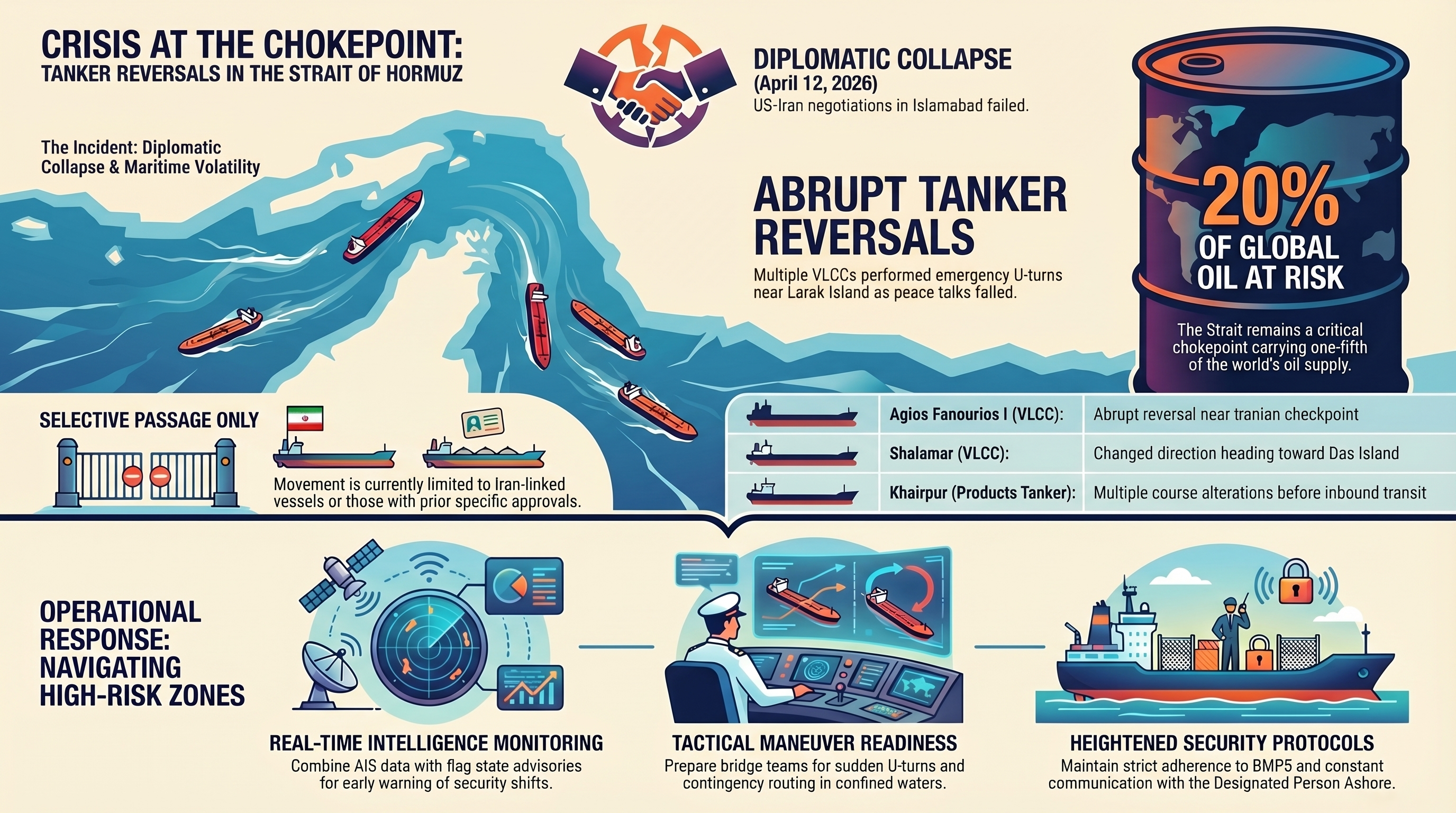
Maritime professionals monitoring the Persian Gulf region observed a sudden shift in tanker movements on April 12, 2026. Several empty crude oil carriers approached the entrance to the Strait of Hormuz from the Gulf of Oman but performed abrupt reversals near Iran's Larak Island. This development occurred shortly after news broke that high-level peace talks between the United States and Iran had ended without agreement in Islamabad.
Ship-tracking data revealed the incidents in detail. Two Very Large Crude Carriers (VLCCs) and one Aframax-class vessel turned back at the last moment. The Iraq-bound Agios Fanourios I, managed by a Greek company, and the Pakistan-flagged Shalamar, owned by Pakistan National Shipping Corporation and heading toward Das Island in the UAE, changed direction close to the Iranian checkpoint area. Meanwhile, one VLCC named Mombasa B successfully passed between Larak and Qeshm islands into the Persian Gulf, though its final destination remained unclear at the time of reporting. A Pakistani oil products tanker, Khairpur, also altered its course multiple times before continuing inbound.
These reversals highlight the persistent uncertainty surrounding navigation in one of the world's most critical energy chokepoints. The Strait of Hormuz has seen severely restricted traffic since late February 2026, when military actions involving the US and Israel led to its effective closure under Iranian influence. The waterway, which normally carries around one-fifth of global oil supplies, became a focal point of tension, with Iran-linked vessels dominating limited movements and many commercial ships avoiding the route due to elevated security risks.
Negotiations in Pakistan centered on reopening the strait as part of a fragile ceasefire arrangement. However, deep disagreements prevented any breakthrough. The failure of talks has raised concerns about the stability of the temporary truce and the safety of merchant vessels operating in the area. Empty tankers are particularly important for the region, as they position themselves to load new cargoes from Gulf oil terminals. Without reliable access, global supply chains face ongoing disruptions, contributing to volatility in energy markets.
For seafarers, this situation underscores several key operational lessons. First, real-time monitoring of geopolitical developments is essential when planning transits through high-risk zones. Automatic Identification System (AIS) data, combined with intelligence from sources like shipping associations and flag state advisories, can provide early warnings of changing conditions. In this case, vessels approached the strait expecting possible clearance but encountered a rapidly evolving security environment.
Second, masters and bridge teams must prepare for sudden course alterations. U-turn maneuvers in confined waters near islands require careful assessment of traffic, currents, and potential hazards. Companies should ensure crews receive updated risk assessments before entering the Persian Gulf or Gulf of Oman, including contingency plans for aborted transits and alternative routing via longer passages around Africa or through other pipelines where feasible.
The events also remind mariners of the importance of clear communication with vessel operators and charterers. Several shipping companies did not immediately respond to inquiries, likely due to the sensitive nature of operations in the region. Seafarers on tankers should maintain heightened vigilance, adhere strictly to best management practices for piracy and war risk (such as those outlined in BMP5 or regional guidelines), and stay in close contact with their Designated Person Ashore (DPA).
On a positive note, some movement continues. Just a day earlier, three laden supertankers, including two Chinese vessels and one Greek carrier, successfully exited the strait with crude oil. This represented one of the busier periods for non-Iranian oil shipments since the conflict began. Such fluctuations show that transits remain possible under certain conditions, often requiring prior approvals from relevant authorities. However, the overall volume stays far below normal levels, with many vessels still anchored or loitering in safer waters awaiting clearer guidance.
The broader implications for the maritime industry extend beyond immediate routing decisions. Prolonged restrictions in the Strait of Hormuz affect oil prices, charter rates, and insurance premiums for vessels trading in the Middle East. Crew welfare also comes into focus, as extended delays or rerouting can increase fatigue and psychological strain on seafarers working in tense environments.
As the situation develops, mariners are advised to consult the latest notices from the International Maritime Organization (IMO), national maritime authorities, and commercial intelligence providers. The security landscape in the Strait of Hormuz can change quickly, influenced by diplomatic outcomes, naval activities, and regional statements. Freedom of navigation remains a core principle, but practical realities on the water demand prudent decision-making.
In summary, the recent U-turns by oil tankers serve as a timely reminder of the close link between international diplomacy and safe ship operations. For those training to navigate complex global trade routes, studying these incidents builds awareness of how geopolitical shifts directly impact daily work at sea. Staying informed, prepared, and professional remains the best approach to managing risks in volatile regions.
Resource:
This article is a paraphrased and educational adaptation based on reporting from gCaptain and supporting maritime intelligence sources as of April 12, 2026. For original details, refer to professional shipping news platforms and official maritime security bulletins.
There are no comments.
Similar Posts
-
US Naval Blockade of Iranian Ports Enters Second Day as Peace Talks Show Signs of Progress
April 14, 2026, 5:40 p.m.
-
Damaged Energy Facilities in the Gulf Region
April 12, 2026, 4:59 p.m.
-
Restricted Access in the Strait of Hormuz: How a Double Blockade Limits Commercial Shipping
April 15, 2026, 6:25 p.m.
-
Maritime Security and the Shadow Fleet: Swedish Authorities Intervene in Baltic Sea Case
May 4, 2026, 6:33 p.m.