May 12, 2026, 9:26 a.m.
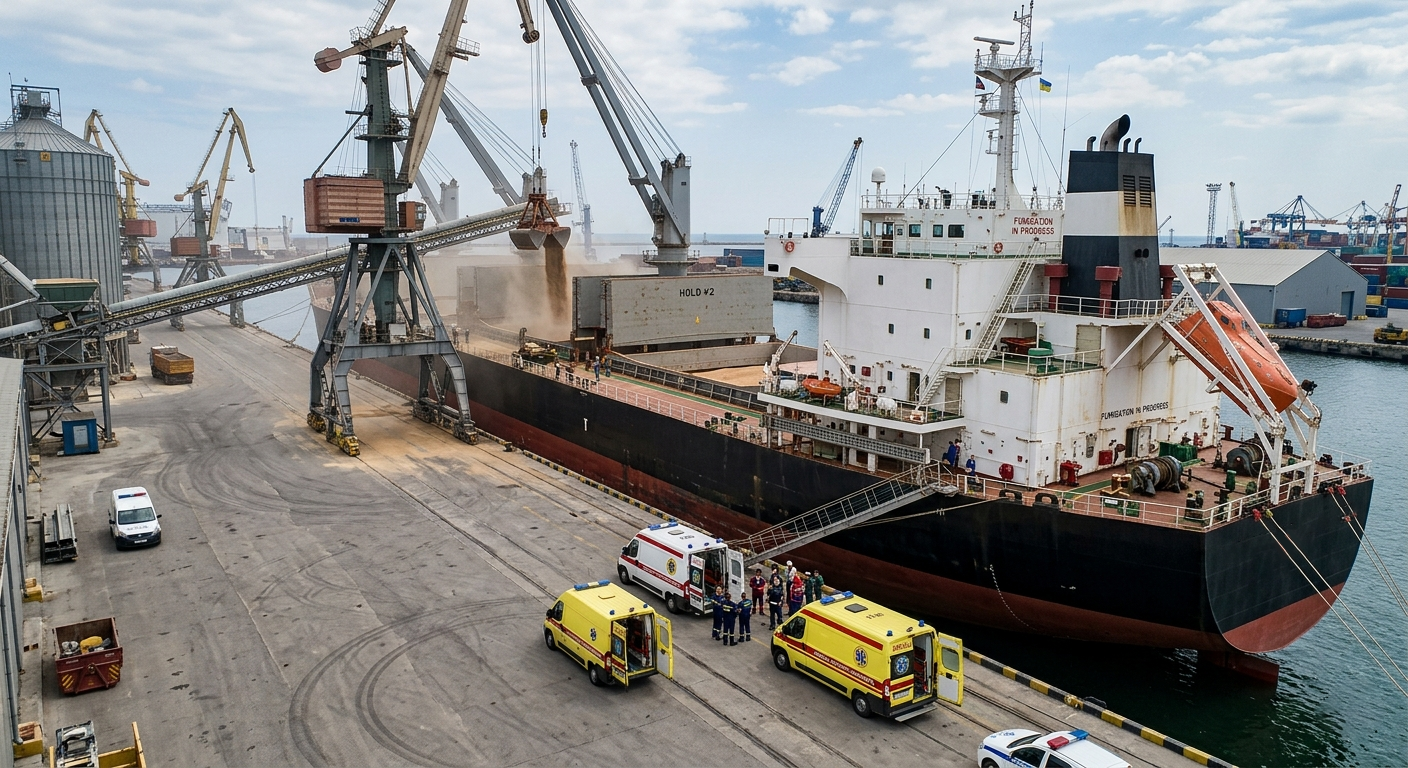
This real-life maritime incident highlights the severe dangers associated with cargo fumigation and the critical importance of proper procedures, communication, and safety equipment on board ships carrying fumigated cargoes. It serves as a powerful case study for seafarer training on chemical hazards and risk management.
A general cargo vessel had finished loading a hold with shea nuts. Shortly before departure, two fumigators boarded the ship to apply a phosphine-generating fumigant. They informed the crew that the agent would activate approximately 15 minutes after placement. Wearing face masks, the fumigators distributed bags of the product across the cargo surface and sprinkled them with liquid.
During the application, the crew noticed a strong, sharp, unidentified odor. The fumigators advised the crew to avoid breathing in the substance while securing the hatch covers. Once the hatches were closed and secured, the odor dissipated. Importantly, the Chief Officer received no written instructions, safety data sheets, or warning leaflets from the fumigators regarding the fumigant's properties or potential risks.
The vessel sailed as planned. The following night, starting around midnight, multiple crew members began suffering from stomach pains, vomiting, chills, and general weakness. Symptoms worsened throughout the day. The Master, also experiencing similar effects, contacted the shipowner and consulted a physician via coast radio station. Initially suspecting food poisoning, the doctor recommended diverting to the nearest port. A local physician boarded by motorboat and prescribed medications that were administered to the crew.
Despite treatment, conditions continued to deteriorate. On the second night, the Chief Officer, scheduled for the 4-8 watch, contacted the Officer of the Watch around 3 a.m. and asked him to extend his duty because he felt severely unwell. Shortly after 4 a.m., a crew member discovered the Chief Officer unresponsive in his cabin. Emergency resuscitation efforts began immediately, and medical assistance was requested.
While attending to the Chief Officer, the Third Officer’s condition rapidly worsened. He developed serious breathing difficulties and received oxygen. Despite resuscitation attempts, he was pronounced deceased after approximately 40 minutes. The Chief Officer also did not survive.
The remaining 15 crew members were later tested ashore and diagnosed with phosphine gas poisoning.
Investigation Findings
The inquiry revealed that leaks in the air conditioning system’s ventilation trunk allowed toxic gas from the fumigated cargo hold to migrate into the A/C control room and then into crew accommodation areas. This leakage proved to be a primary cause of the widespread exposure.
The Chief Officer had carried shea nuts on a previous voyage without fumigation. As a result, he did not anticipate the procedure or fully understand the necessary precautions for this voyage.
Phosphine Gas Concentration Effects (Approximate Guidelines)
- 0.3 ppm: Safe for up to 8 hours daily exposure
- 1.0 ppm: No effects for exposures under 15 minutes
- 5.0 ppm: No life-threatening effects for up to 1 hour
- 100–190 ppm: Serious health consequences after 30–60 minutes
- 290–430 ppm: Life-threatening after 30–60 minutes
- 400–600 ppm: Fatal after 30–60 minutes
Key Lessons for Seafarers
1. Professional fumigators must provide clear written instructions, procedures, and safety information before the vessel departs. If this documentation is missing, delay sailing until it is obtained.
2. When unfamiliar with fumigation requirements for a cargo, exercise stop-work authority and seek full briefing and guidance.
3. Treat any widespread illness on a vessel carrying fumigated cargo as potential fumigant poisoning until proven otherwise. Do not assume food poisoning.
4. Ships transporting fumigated cargoes should be equipped with appropriate gas detection instruments, residual fumigant disposal guidelines, sufficient respiratory protective equipment (minimum four sets), updated Medical First Aid Guide for Dangerous Goods, and suitable medical supplies.
5. Conduct regular gas concentration checks in accommodation, engine room, bridge, and other frequently occupied spaces. Record results in the ship’s logbook. Eight-hour intervals may be insufficient in some situations – increase frequency when risks are present.
This incident underscores that fumigation introduces serious chemical hazards that can silently affect crew through ventilation systems and other pathways. Proper planning, equipment, and vigilance are essential to prevent such tragedies.
Resource:
Original case reference from MARS Reports via Marine Insight (May 2026).
There are no comments.
Similar Posts
-
Explosion and Fire Aboard Shadow Fleet Tanker Kairos in Black Sea – Suspected Mine Strike
Nov. 29, 2025, 3:39 p.m.
-
Enhancing Maritime Safety: Vital Insights from IMO's 110th Maritime Safety Committee Session
Nov. 7, 2025, 3:01 p.m.
-
Incident Analysis: Unauthorized Entry into Confined Spaces
Sept. 11, 2025, 7:40 a.m.
-
Ship's Safety Officer: Duties and Rights
July 29, 2025, 9:33 p.m.