Nov. 29, 2025, 3:39 p.m.
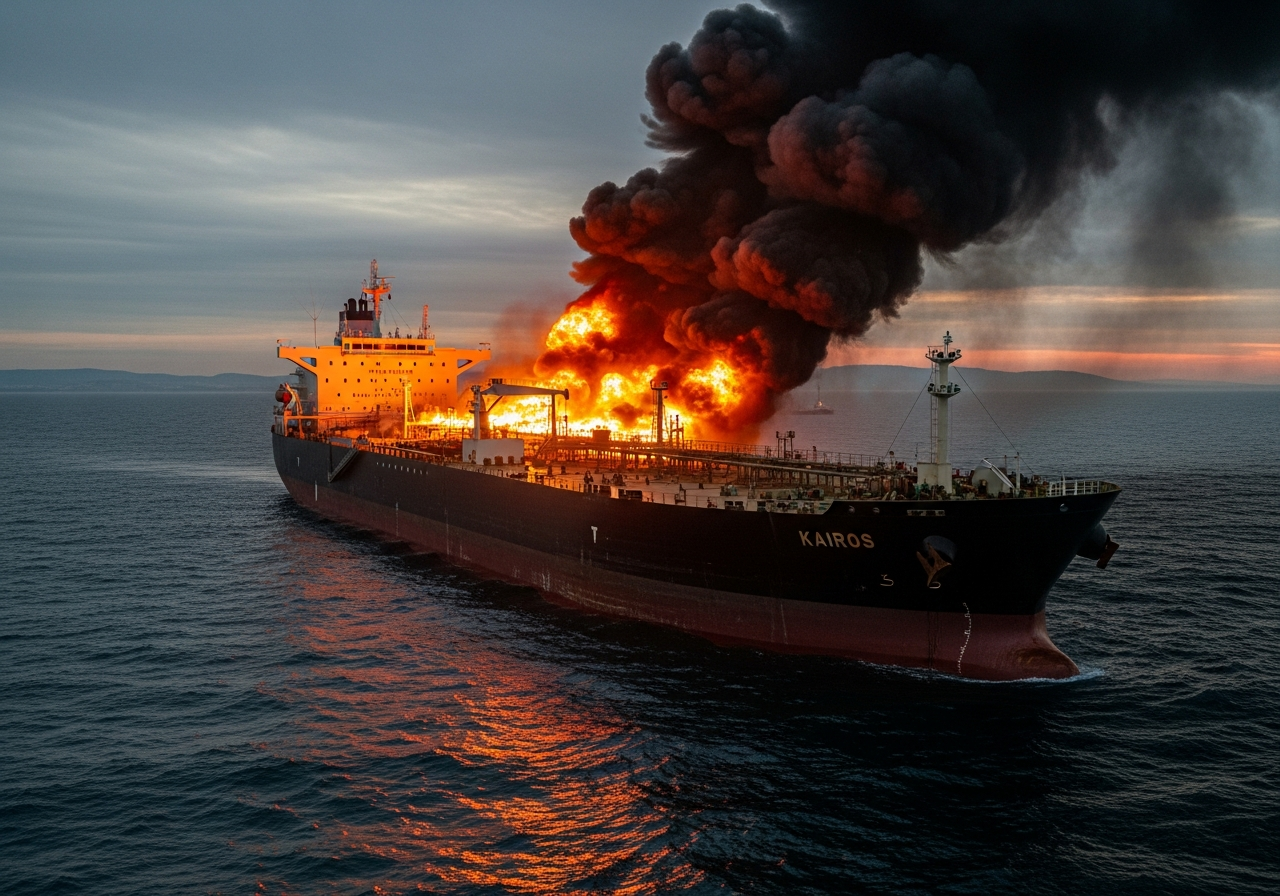
On 28 November 2025, the Liberia-flagged crude oil tanker Kairos (IMO 9256602, built 2003) suffered a major explosion and subsequent fire while transiting the Black Sea approximately 40 nautical miles south of the Kerch Strait. Multiple maritime tracking services and crew distress messages confirm the vessel was adrift and burning heavily after the incident.
The 115,000 DWT tanker had loaded crude oil at the Russian port of Novorossiysk and was proceeding toward the Mediterranean. According to open-source intelligence reports and satellite imagery, Kairos belongs to the so-called “shadow fleet” – older vessels that frequently used to transport sanctioned Russian and Iranian oil. The ship had recently changed flag from Cameroon to Liberia and was operating without active AIS transmission, a common practice among shadow-fleet units.
Crew members reported a loud explosion on the starboard side near the cargo tanks, followed immediately by fire. Twenty-one of the 23 crew were evacuated by nearby vessels and Russian rescue units. Two seafarers remain missing, and several sustained injuries. Russian authorities later confirmed that a sea mine is the most probable cause of the blast. The Black Sea remains contaminated with drifting mines laid during the ongoing Russia-Ukraine conflict.
The fire spread rapidly through several cargo and slop tanks, producing a large plume of black smoke visible on satellite images. As of the latest reports, the tanker remains afloat but is listing and continues to burn. Tugboats and pollution-response vessels have been dispatched to the scene.
Key Lessons for Professional Mariners
- Heightened Risk in the Black Sea Even outside the declared war-risk zone, drifting mines continue to pose a lethal threat in the entire Black Sea basin. Masters should maintain maximum vigilance and consider routing farther offshore when possible.
- Shadow Fleet Dangers Many shadow-fleet vessels are old, poorly maintained, and often lack proper class or insurance. Crews on these ships frequently face delayed wages, substandard safety equipment, and limited emergency support.
- Mine Recognition and Response
- Maintain a dedicated anti-mine lookout in known risk areas
- Immediately alter course and speed if a mine-like object is sighted
- Broadcast a security message on VHF 16 and via Inmarsat if a mine is confirmed
- Prepare lifeboats and immersion suits for rapid abandonment
- Explosion and Fire On Tankers The rapid spread of fire after the explosion on Kairos underlines the importance of:
- Strict hot-work and inert-gas system procedures
- Regular testing of fixed CO2 and foam systems
- Crew familiarity with the Shipboard Oil Pollution Emergency Plan (SOPEP) and damage-stability booklet
- AIS and Identification Deliberate AIS “dark” operation significantly delays search-and-rescue response. When operating legally, keeping AIS on improves both safety and coordination with coastal authorities.
Source gCaptain
Similar Posts
-
Fumigation Tragedy at Sea: Fatal Phosphine Poisoning Claims Lives of Chief and Third Officers
May 12, 2026, 9:26 a.m.
-
Drone Strike on Izmail Port: Foreign-Flagged Vessels Damaged in Black Sea Corridor
April 15, 2026, 6:35 p.m.
-
How a Single Minor Component Failure Triggered Grounding, Sinking, and Port Blockage
June 1, 2026, 8:04 p.m.