
May 4, 2026, 6:41 p.m.
Fundamental Concepts of Dry Bulk Shipping
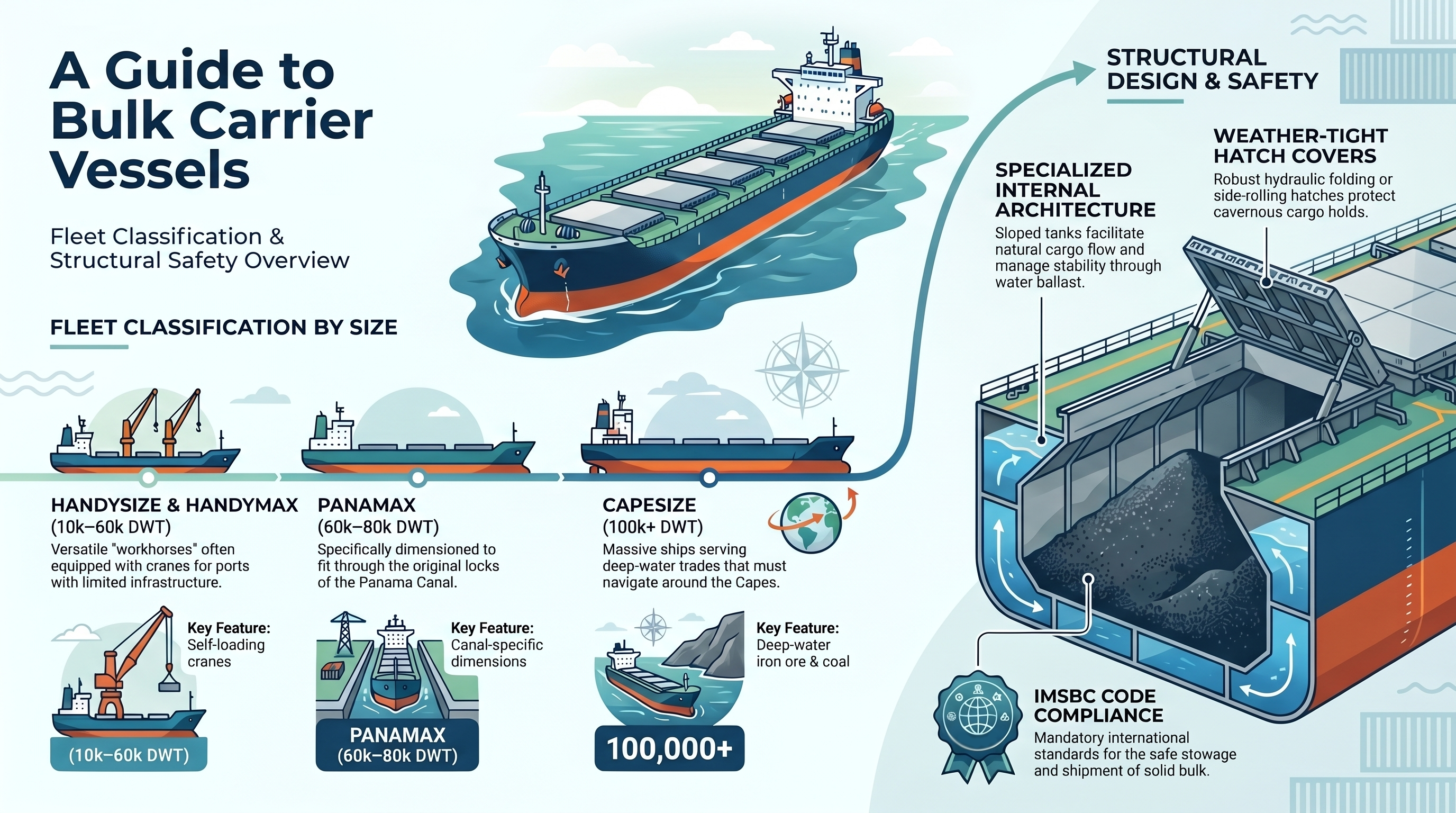
Bulk carriers represent a specialized category of merchant vessels designed specifically to transport unpackaged cargo in large quantities. Unlike container ships that carry goods in standardized boxes, bulkers utilize large hydraulic hatches to access cavernous holds. These vessels are the backbone of global trade, moving essential raw materials such as coal, iron ore, and various grains across the oceans. The design of a bulk carrier is focused on maximizing volume and structural integrity. Since dry bulk cargoes can be extremely heavy or prone to shifting, the internal architecture must account for specific gravity and stability requirements. Understanding the unique stress points of these hulls is a primary requirement for any deck officer or marine engineer.
Classification by Size and Capacity
In the maritime industry, bulk carriers are categorized based on their dimensions and the specific geographic routes they can navigate. Key classifications include Handysize and Handymax vessels. These are the workhorses of the fleet, typically ranging from 10,000 to 60,000 DWT. They are often equipped with their own cranes, allowing them to operate in ports with limited infrastructure. Panamax vessels are designed to fit through the original locks of the Panama Canal, generally falling between 60,000 and 80,000 DWT. Capesize units are large vessels exceeding 100,000 DWT that are too big for canals and must navigate around the Cape of Good Hope or Cape Horn. They primarily serve the deep-water iron ore and coal trades.
Structural Features and Cargo Handling
The most distinguishing feature of a bulk carrier is the large hatch covers. These are designed to be weather-tight and robust enough to withstand heavy seas. Modern vessels often utilize folding or side-rolling hatches. Internally, the holds are designed with sloped topside tanks and hopper tanks at the bottom. These facilitate the natural flow of cargo toward the center for easier discharge and help manage stability through water ballast. Loading and discharging bulk cargo is a delicate operation. Cargoes like iron ore are very dense and can cause structural damage if dropped from a height or distributed unevenly.
Safety Challenges and Modern Regulations
Bulk carriers face specific safety risks including hull stress, corrosion, and the potential for liquefaction of certain minerals. High-density cargoes can put immense pressure on the tank top, necessitating strict adherence to the loading manual. International regulations, such as the IMSBC Code, provide mandatory standards for the safe stowage and shipment of solid bulk cargoes.
Resource: Based on maritime technical standards from Marine Insight.
There are no comments.
Similar Posts
-
How a Single Minor Component Failure Triggered Grounding, Sinking, and Port Blockage
June 1, 2026, 8:04 p.m.
-
Navigating the Strait of Hormuz: Regional Perspectives and Security Trends
April 22, 2026, 6:38 p.m.
-
Global Energy Shift: The Rise of Atlantic Basin Tanker Routes
April 22, 2026, 6:32 p.m.