
Dec. 9, 2025, 8:56 a.m.
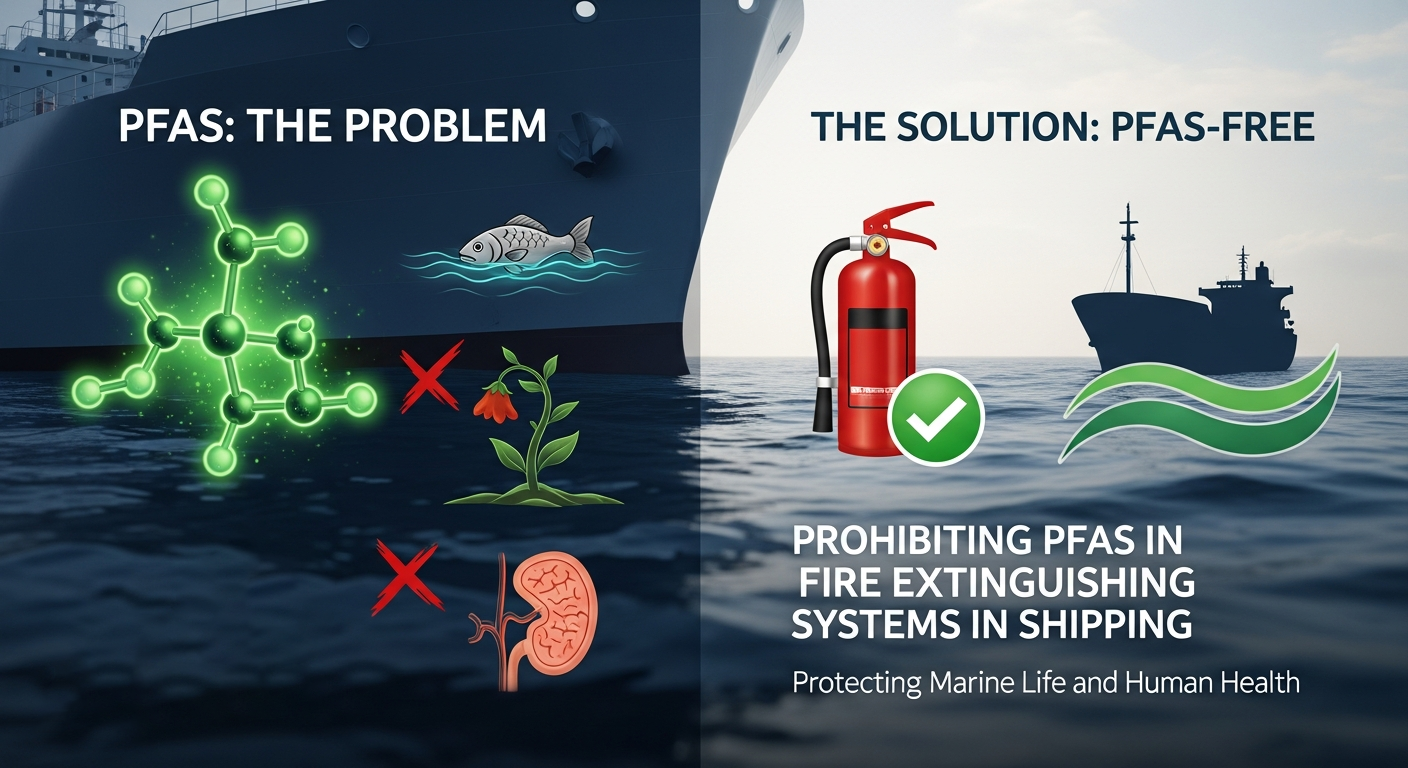
Perfluorooctane sulfonate (PFOS) is a synthetic chemical that has been widely used for decades in aqueous film-forming foam (AFFF), the most effective firefighting agent for flammable liquid fires on ships. Thanks to its ability to create a create a thin aqueous film that quickly smothers hydrocarbon fires, PFOS-based foam became the standard solution for engine rooms, cargo decks, and helicopter landing areas.
However, PFOS belongs to the group of per- and polyfluoroalkyl substances (PFAS), often called “forever chemicals” because they do not break down in the environment. Scientific studies have shown that PFOS is highly persistent, bioaccumulative, and toxic to both humans and marine life. It has been linked to liver damage, immune system effects, and certain cancers in exposed populations.
Because of these risks, the international community has taken decisive action:
- 2009 – PFOS was added to Annex B of the Stockholm Convention on Persistent Organic Pollutants (restricted use)
- 2023 – IMO adopted resolution MSC.1/Circ.1663 banning the use and carriage of PFOS-based firefighting foam on ships
- 1 January 2026 – deadline for all ships to stop using PFOS-containing media and switch to approved alternatives
Under the amended SOLAS regulation and the new IMO guidelines, all vessels must:
- Identify whether their fixed firefighting systems or portable extinguishers contain PFOS (check certificates and safety data sheets)
- Replace PFOS-containing foam concentrates with fluorine-free foams (F3) or other approved environmentally friendly agents
- Dispose of old foam through certified waste management companies that can destroy PFOS without releasing it into the environment
- Update the ship’s Fire Safety Operational Booklet and crew training records
For cadets and serving officers, this change means new familiarization training on fluorine-free foams, which behave differently during discharge and require slightly adjusted firefighting tactics. Although F3 foams are less aggressive on Class B fires than traditional AFFF, modern formulations have been tested and approved by IMO as fully compliant with MSC.1/Circ.1312 requirements.
Ship operators are encouraged to act well before the 2026 deadline, as certified disposal facilities already face long waiting lists. Early replacement also avoids possible port state control detentions after the ban enters into force.
Source: Marine Insight (December 2025)
There are no comments.
Similar Posts
-
International Regulations for Safe and Efficient Container Shipping at Sea
Feb. 16, 2026, 7:31 a.m.
-
Top 10 ECDIS Mistakes Leading to Serious Port State Control Issues in 2025
Dec. 17, 2025, 9:55 a.m.
-
Safety Alert: Preventing Unintended Launches of Free-Fall Lifeboats
Nov. 22, 2025, 4:57 p.m.